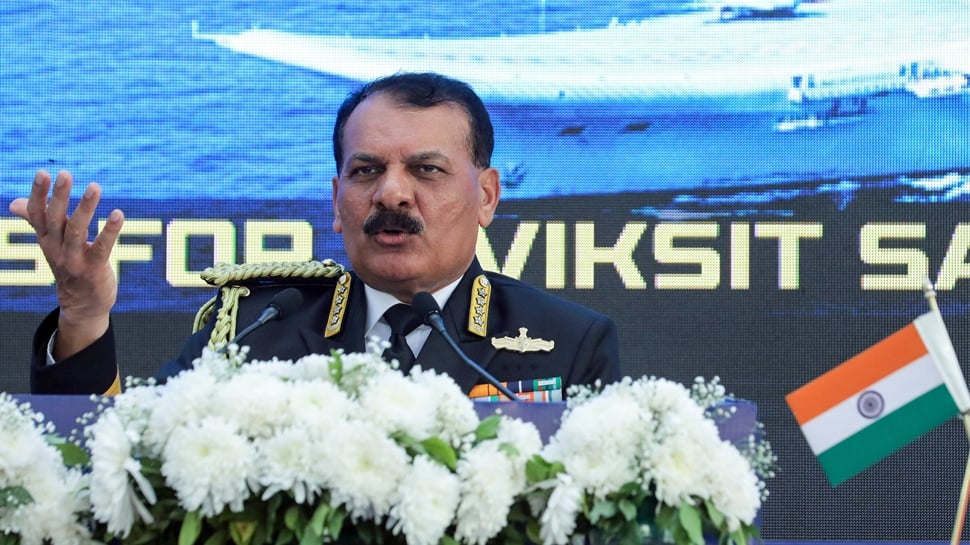
Navy Chief Admiral Dinesh K. Tripathi returned to his alma mater on Saturday morning to review the Passing Out Parade of the 149th course of the National Defence Academy — and used the occasion to set out what he called the “three enduring virtues” that will define India’s next generation of military leaders.
Addressing 329 graduating cadets on the Khetrapal Parade Ground, the Chief of Naval Staff began on a personal note. He reminded them that he once stood on the same drill square with similar hopes, and with the same uncertainty about what lay ahead. “Awards may acknowledge excellence, but they do not define your destiny,” he said, urging cadets to measure themselves by their choices, not the medals pinned on their chest.
The parade, marked by a crisp turnout and an unusually spirited march past, included 20 cadets from friendly foreign countries. Fifteen women cadets — the second batch to pass out from the NDA — also took the oath, with the Navy Chief calling their presence “a reaffirmation that the Services honour only one standard, and that is merit.”
Admiral Tripathi structured his address around what he described as the three pillars of effective leadership: competence, courage and character.
He quoted Field Marshal Sam Manekshaw to underline the first. Knowledge and professional competence, he said, are not career formalities but obligations to the soldiers and sailors who will one day follow their orders. “Rank may define your credentials, but competence will define your credibility,” he told the cadets, making it clear that seniority without expertise carries little weight in modern theatres.
On courage, the Navy Chief’s tone shifted from the ceremonial to the practical. Courage, he said, is rarely the dramatic absence of fear; more often, it is the quiet ability to keep moving despite fear. He warned cadets against mistaking bravado for bravery. “It is a bold decision born of responsibility,” he said, adding that courage grows slowly, “like a muscle”, through discipline and difficult choices.
But it was his remarks on character that resonated the most with the assembled parents and faculty. Admiral Tripathi invoked the story of Captain Mahendranath Mulla, the commanding officer of INS Khukri, who went down with his ship in 1971 after ensuring his men had a chance to escape. That final salute, the Navy Chief said, remains one of the most important lessons in military ethics — not because it belonged to another era, but because similar tests of principle continue to confront officers today, often away from public view.
The speech also carried an unmistakable warning about the times the young officers are stepping into. He described a world where “lines between peace and conflict, or truth and manipulation, no longer remain clear,” hinting at hybrid threats, information warfare and rapid technological disruption. In such an environment, he said, clarity of mind and moral steadiness matter as much as weapon systems.
The parade concluded with the traditional slow march and the cadets’ final shout of the Academy credo. As they left the ground, many would have heard the Navy Chief’s final assurance: military life may not be predictable, he said, but it will always be meaningful — and that alone makes the journey worth taking.
About the Author