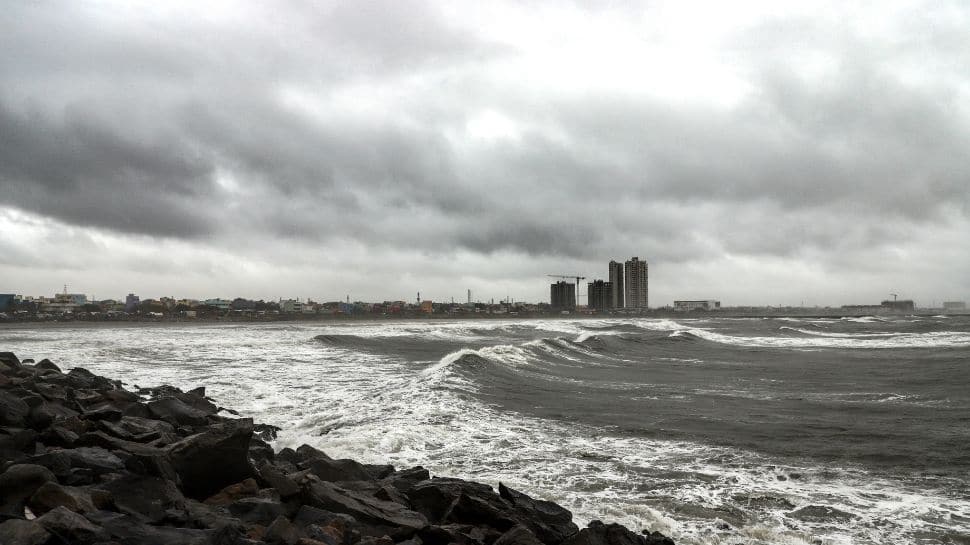
Cyclone Ditwah, the latest tropical storm formed over the Southwest Bay of Bengal around 26 November 2025, continues to intensify as it moves across the region. The India Meteorological Department (IMD) has issued alerts for Tamil Nadu, Puducherry, and South Andhra Pradesh, urging residents to stay cautious as the system strengthens.
Origin of Cyclone Ditwah
Cyclone Ditwah developed from a well-marked low-pressure area over the Southwest Bay of Bengal on 26 November 2025. Weather experts say several atmospheric conditions helped the disaster grow rapidly.
Warm sea surface temperatures between 28°C and 30°C provided the heat energy needed for cyclogenesis. Low vertical wind shear, recorded at 10–15 knots, supported the vertical development of clouds. Moisture-rich monsoonal winds also fed the system, helping it intensify quickly.
Within just 24 to 36 hours, the disaster strengthened from a low-pressure area into a depression, then a deep depression, and finally evolved into a full cyclonic storm.
Why the Name ‘Ditwah’?
The name “Ditwah” was given by Yemen, following the WMO-ESCAP naming system used for cyclones in the Indian Ocean region. The word refers to Detwah Lagoon, a well-known ecological hotspot in Yemen’s Socotra Archipelago.
Cyclone names are selected sequentially from a list contributed by 13 countries, including India, Bangladesh, Pakistan, UAE, Sri Lanka, Thailand, and others.
India Extends Support to Sri Lanka
India expressed deep condolences to the people of Sri Lanka, who faced severe destruction after Cyclone Ditwah made landfall on the island’s eastern coast. Under Operation Sagar Bandhu, India dispatched emergency relief supplies and humanitarian assistance. The support reflects India’s “Neighbourhood First” policy and its Vision MAHASAGAR commitment to regional safety and cooperation.
(Also Read: Chennai Schools Closed: City On Orange Alert As Cyclone Ditwah Remnant Nears Coast)
Severe Impact in Sri Lanka
Sri Lanka has reported at least 410 deaths and 336 missing due to heavy rains, flooding, and landslides triggered by Cyclone Ditwah. The Kandy region has been the worst affected, with 88 deaths and 150 people still unaccounted for.
Authorities are working to clear blocked roads using bulldozers and backhoes to allow essential supplies to reach isolated areas. Over 20,000 people have been displaced, and nearly 1.2 million residents have been affected across the country. Efforts are also underway to restore electricity and communication services damaged by strong winds.
About the Author