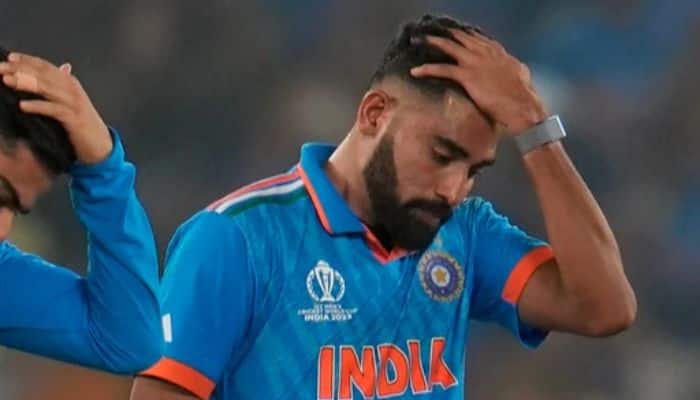
The debate surrounding Mohammed Siraj’s role in Indian cricket resurfaced with intensity after Aakash Chopra openly questioned why one of India’s most skilled pacers has been quietly pushed out of limited-overs contention. In the wake of India’s defeat to South Africa in the second ODI at Raipur, Chopra’s commentary has amplified concerns among fans and analysts who believe Siraj has far more to offer than being confined to red-ball cricket. Siraj’s transformation into a Test specialist has baffled many, especially given his proven pedigree in ODIs and T20Is. Armed with new-ball swing, relentless accuracy, and the ability to extract bounce even on flat decks, Siraj once served as India’s go-to all-format enforcer. His match-winning seven-wicket spell in the Asia Cup 2023 final remains one of the most explosive ODI performances of the decade, a reminder of the impact he can create when trusted with responsibility.
Chopra’s Criticism: “When Did Siraj Become a One-Format Player?”
Speaking on his YouTube channel and later on his social platforms, Aakash Chopra admitted he was “surprised” and “unable to wrap his head around” Siraj’s current situation. Despite delivering disciplined spells against Australia recently — maintaining an economy rate between 4 and 6 even without many wickets — Siraj has found himself omitted from both ODI and T20I plans.
Chopra highlighted the inconsistency in selection logic. Fast bowlers like Harshit Rana and Prasidh Krishna have been receiving more white-ball opportunities, while Siraj, with significant experience and proven success, has been mysteriously sidelined.
Fans particularly questioned Siraj’s exclusion from the Champions Trophy 2025 squad — a decision that baffled many given that he was India’s highest ODI wicket-taker just two years earlier. Chopra noted that Siraj is currently playing domestic cricket but not being reintegrated into the national white-ball setup, a move he believes lacks transparency.
India’s Bowling Puzzle: Rotation or Over-Rotation?
India’s selection committee appears to be focused on grooming young fast bowlers, especially ahead of a packed ICC tournament schedule. While rotation is an understandable strategy to manage workload, critics argue that over-experimentation has left India without a reliable, settled pace unit during key overseas tours and dew-heavy home matches.
In white-ball cricket, conditions often demand experience and adaptability — traits Siraj undeniably possesses. His ability to swing the ball upfront and apply pressure during middle overs makes him a valuable asset, especially in tournaments like the Champions Trophy or T20 World Cup where conditions fluctuate dramatically.
Chopra’s comments have reopened the conversation around selection clarity, workload management, and India’s long-term fast-bowling roadmap.
About the Author