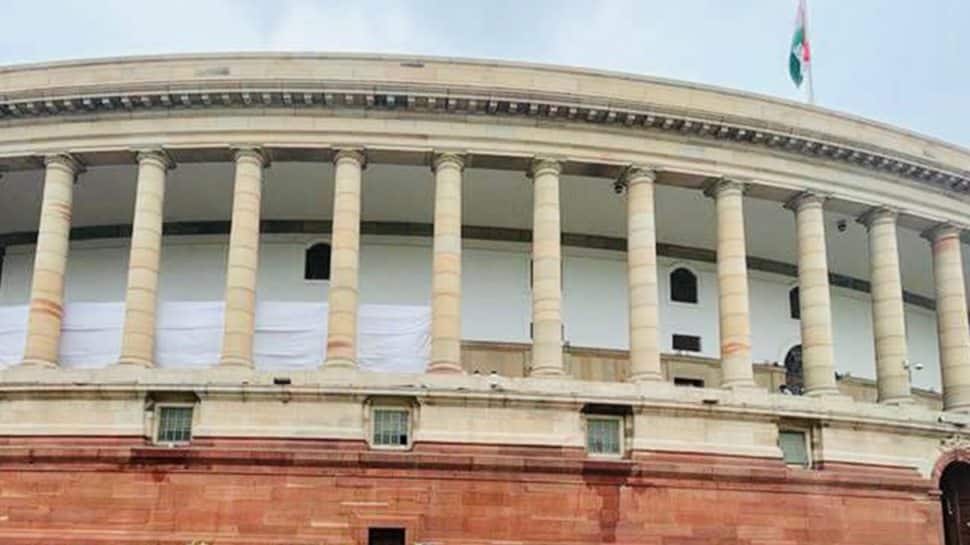
Twenty-four years have passed since the morning when five armed men attempted to storm India’s Parliament, but the shock of that moment continues to shape how the country understands terrorism and national security. The assault, carried out on 13 December 2001, lasted less than an hour, yet it exposed vulnerabilities that would take years to address and revealed the extent to which Pakistan-based militant groups had evolved their reach.
The sequence of events that day remains stark in its simplicity. A white Ambassador car bearing forged Home Ministry and Parliament labels entered the complex shortly before noon. Both Houses had adjourned barely forty minutes earlier, leaving ministers, staff and security personnel still inside the premises. When the impostor vehicle was stopped, the five militants opened fire, triggering a fierce gun battle that left nine Indians dead—six from the Delhi Police, two from Parliament security and a gardener. The attackers were killed before they could reach the building where MPs had gathered. Subsequent investigations traced the operation to Jaish-e-Mohammed (JeM), a Pakistan-based organisation already on the United Nations’ terrorism sanctions list at the time.
Understanding JeM’s role is essential to understanding the significance of the attack. Founded in 2000 by Masood Azhar, the group established its headquarters in Bahawalpur and quickly expanded through training facilities and madrassas. Although Pakistan formally banned JeM in 2002, the organisation’s networks remained largely intact. Its leaders continued to preach publicly, its infrastructure grew, and its cadres figured prominently in attacks across India—not only in 2001, but in the years that followed. India’s claim that the Parliament attack was coordinated from across the border was not an isolated allegation; it fitted a long-recognised pattern in which elements of Pakistan’s military-intelligence establishment treated certain militant groups as proxy instruments.
The global context after the attack sharpened these concerns. Pakistan spent years on the Financial Action Task Force (FATF) grey list because of deficiencies in its terror-financing controls, and JeM was repeatedly cited as an example. Despite technical steps taken to avoid blacklisting, the group continued to operate with a degree of continuity that suggested structural tolerance. In 2019, the UN designated Masood Azhar a global terrorist, further underscoring the international belief that the organisation’s presence remained intact.
The attack also forced India to rethink its own security architecture. Parliament security was overhauled almost immediately, and over time the changes became more structural. Access points were redesigned, identity checks strengthened and multiple layers of perimeter control introduced. Those early steps eventually gave way to more comprehensive reforms. After a breach in December 2023 involving two individuals who disrupted proceedings in the Lok Sabha chamber, the government transferred full responsibility for the Parliament complex to the Central Industrial Security Force (CISF). A year later, in 2025, the complex underwent a technology-heavy upgrade that included electric power fencing, fibre-optic intrusion detection and a fully integrated video-management system.
Beyond physical security, the Parliament attack catalysed the creation of an intelligence-fusion culture in New Delhi. The Multi-Agency Centre, established in 2001, gradually transformed from a basic coordination desk into a national grid linking the Intelligence Bureau, the armed forces, state agencies and Delhi Police. By 2025, the system was being augmented with artificial intelligence, machine-learning tools and geospatial mapping capabilities. Counter-terror investigations also became more specialised with the creation of the National Investigation Agency in 2008, which now handles cases involving cross-border dimensions.
While the nation strengthened its defences, JeM adapted as well. Over the years, the group shifted from large, conspicuous fidayeen squads to decentralised cells capable of operating with minimal signature. Its cadres increasingly included educated recruits who could manage communication encryption, logistics and urban concealment. One of the most significant shifts came with the emergence of Jamaat-e-Mominaat, a women’s wing involved in religious indoctrination and support activities. This development mirrored global extremist trends and reflected JeM’s effort to widen its recruitment base. Recent terror investigations, including a case linked to a 2025 explosion near Delhi’s Red Fort, have uncovered modules drawing on “white-collar” enablers and digital radicalisation networks rather than traditional training pathways.
The Red Fort blast itself highlighted the evolution of the threat within metropolitan environments. The attack killed cab drivers and injured dozens, causing human and economic distress in one of the city’s densest neighbourhoods. Investigators later sealed chemical shops in Faridabad for allegedly supplying bomb-making materials, traced financial transfers linked to JeM handlers, and arrested individuals believed to be connected to the group’s women’s wing. In response, Delhi Police transformed the area around Red Fort with hundreds of cameras equipped with facial recognition, enhanced lighting, mobile surveillance vehicles and a sharp increase in on-ground deployment.
These developments show why the Parliament attack remains relevant today. JeM continues to exist in Pakistan, retaining ideological cohesion and organisational flexibility. Pakistan’s internal volatility and its long-standing approach to proxy groups mean the structural drivers of the threat have not fundamentally changed. Meanwhile, terrorism itself has moved into new domains—encrypted space, digital recruitment, micro-financing and urban concealment—requiring continuous adaptation in India’s security machinery.
Parliament also remains a symbolic target. The 2023 intrusion inside the Lok Sabha chamber, even though it involved no explosives or weapons, demonstrated how powerful the institution is as a stage for disruption. The incident acted as a reminder that while the scale of threats may change, their intent has not.
The 13 December attack endures in India’s memory because it was more than a single act of violence. It revealed the workings of a state-enabled militant ecosystem, exposed weaknesses in domestic security, and triggered reforms that continue to evolve two decades later. Its significance persists because the forces that shaped it—JeM’s adaptability, Pakistan’s proxy doctrine and the shifting nature of terrorism—remain active today. Remembering the attack is not only an act of tribute; it is a recognition that the threat it exposed has transformed rather than disappeared.
About the Author