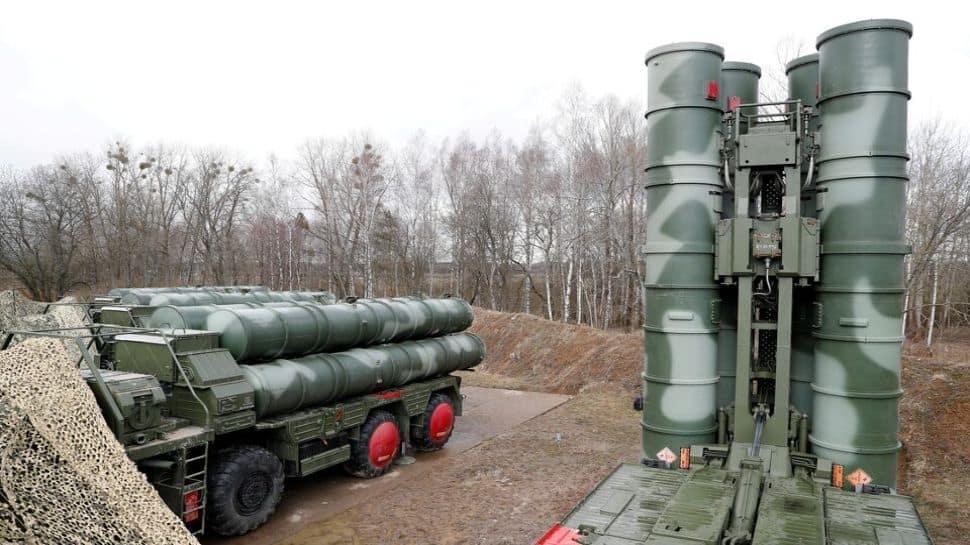
New Delhi: For days, chatter around Turkey’s S-400 air defence system kept getting louder. Many of these claims revolved around the idea that Ankara was weighing a major decision that could potentially create a path for the Russian-made system to reach India.
The noise grew because Turkey has been under pressure. If Ankara wants to find its way back into the US-led F-35 programme, it must give up the S-400 system. Set years ago by Washington, that condition still hangs in the air.
As a result, rumours travelled fast that Turkey might offload the system to ease tensions with the United States and that India could be a possible recipient.
But Ankara has now stepped in with a clear answer.
Turkey’s Firm Denial
On Tuesday (December 9), senior military officials in Turkey put all speculation to rest. Quoting top defence sources, Turkiye Today said the reports about transferring the S-400 to any third country, including India, were baseless.
One senior official was quoted as saying, “Türkiye is not considering transferring the S-400 to any country under any circumstances.”
It means the system will continue to stay where it is.
How The S-400 Controversy Began
The roots of this saga go back to 2017, when Turkey signed a deal with Moscow to buy the S-400. The first batch arrived in 2019. That moment changed Ankara’s ties with Washington almost overnight.
The United States insisted that a NATO member could not operate an advanced Russian missile system because it could expose sensitive data about the American F-35 stealth jet, data that could eventually reach Moscow.
The backlash was swift.
Turkey was ejected from the F-35 programme, even though it had already paid $1.4 billion as part of the purchase plan. That money has still not been returned.
Could India Have Benefited?
Several international reports suggested that Turkey might hand over the S-400 to the United States for research or pass it to a friendly third country. India’s name appeared in those reports because New Delhi already operates Russian S-400 units.
However, defence analysts familiar with the systems believe India gains nothing from Turkey’s version. The reason lies in how Moscow handled the two deals.
For Turkey, Russia supplied an export-grade version of the S-400. Moscow never fully trusted NATO with its core radar codes and held back sensitive configurations.
India, on the other hand, received the same S-400 configuration the Russian military itself uses. In practical terms, this means Turkey’s system is not only different, but also less capable than what India already has.
So even if Ankara wanted to part with it, it would not add value to India’s air defence grid.
What Ankara Is Signalling Now
Turkey’s latest statement has made it clear that the S-400 will remain in its own arsenal, with no move to hand it over to India, the United States or anyone else.
The long-standing friction between Washington and Ankara over the F-35 will continue to define the next chapter of this story.
About the Author