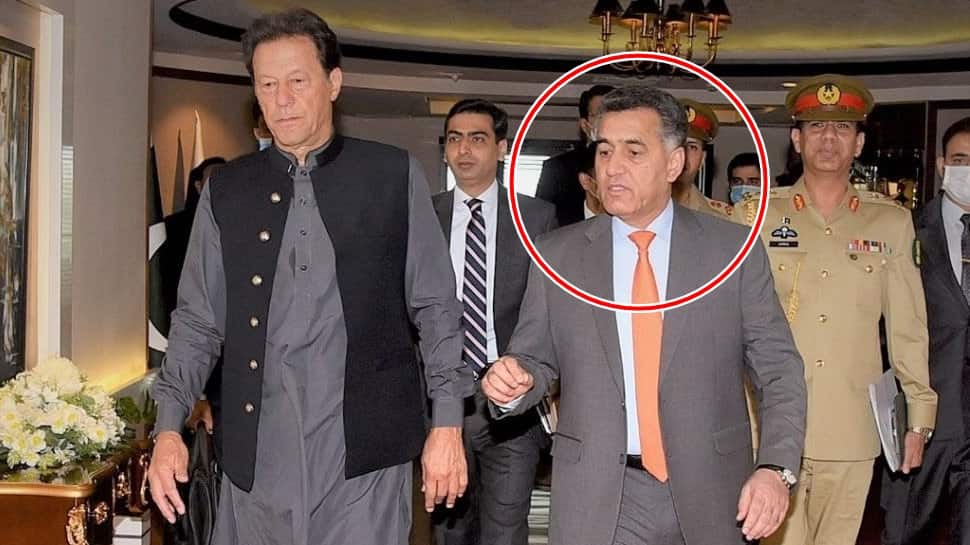
In a move that has sent shockwaves through Pakistan’s military and political establishment, former ISI Director-General Lt. Gen. (Retd.) Faiz Hameed has been sentenced to 14 years of rigorous imprisonment by a Field General Court Martial (FGCM). The verdict, approved on 11 December 2025, marks one of the most severe punishments ever handed to a former top-ranking intelligence official in Pakistan. If reports are to be believed, the Pakistan government is of the opinion that Hameed helped Imran Khan in gaining power and administrative support.
The powerful verdict, delivered under the tenure of Army Chief Gen. Asim Munir, highlights a widening fracture inside the Pakistan Army—an institution historically known for shielding its own senior leadership from public accountability.
ISPR Confirms Charges and Sentence
In a detailed statement, Pakistan’s Inter-Services Public Relations (ISPR) confirmed that proceedings began on 12 August 2024, spanning more than 15 months. Hameed was tried under the Pakistan Army Act on four major charges:
* Engaging in political activities
* Violating the Official Secrets Act
* Misuse of authority and government resources
* Causing wrongful loss to individuals
After what the ISPR described as “lengthy and laborious legal proceedings,” the former general was found guilty on all counts.
The military’s media wing said the trial complied with all legal requirements, adding that Hameed was given full rights, including representation by a defence team of his choice. He retains the right to appeal.
Allegations of Political Engineering Still Under Probe
The ISPR further stated that Hameed’s alleged involvement in fomenting political agitation and working in coordination with specific political elements is being “separately dealt with.” These remarks have intensified speculation regarding the depth of internal factionalism within the armed forces and the extent of political meddling orchestrated by senior intelligence officials.
A Historic First in Pakistan’s Power Structure
In Pakistan—a country where military leaders have often wielded more power than elected governments—such a conviction is extraordinary. Senior generals have traditionally enjoyed immunity even when accused of political interference, corruption, or excessive influence over civilian institutions.
Hameed, once considered one of the most influential figures within the security apparatus and a key architect of political engineering, is the highest-ranking intelligence official in decades to face such punishment.
Internal Crisis Inside the Military
Analysts say the sentencing signals a deep and escalating power struggle within the Pakistan Army, long regarded as the nation’s most stable institution. The public exposure of these divisions underscores the institutional breakdown happening behind the scenes.
The case also sheds light on Pakistan’s chronic civil–military imbalance, where intelligence agencies have historically shaped political outcomes—from installing governments to dislodging them.
Pakistan’s Broader Turmoil Intensifies
The ruling comes at a time when Pakistan is grappling with:
* Persistent political uncertainty
* Severe economic instability
* Resurgent militancy
* Widespread public mistrust in state institutions
Amid these crises, the imprisonment of a former ISI chief reveals the scale of turmoil within the military itself—an institution often described as the backbone of the Pakistani state.
A Turning Point or a Tactical Purge?
Whether this conviction marks the beginning of genuine institutional reform or merely a power consolidation under the current army leadership remains unclear. What is certain, however, is that the sentencing of Faiz Hameed has cracked open the facade of unity within Pakistan’s military establishment, exposing a struggle that may shape the country’s political trajectory in the years ahead.
About the Author