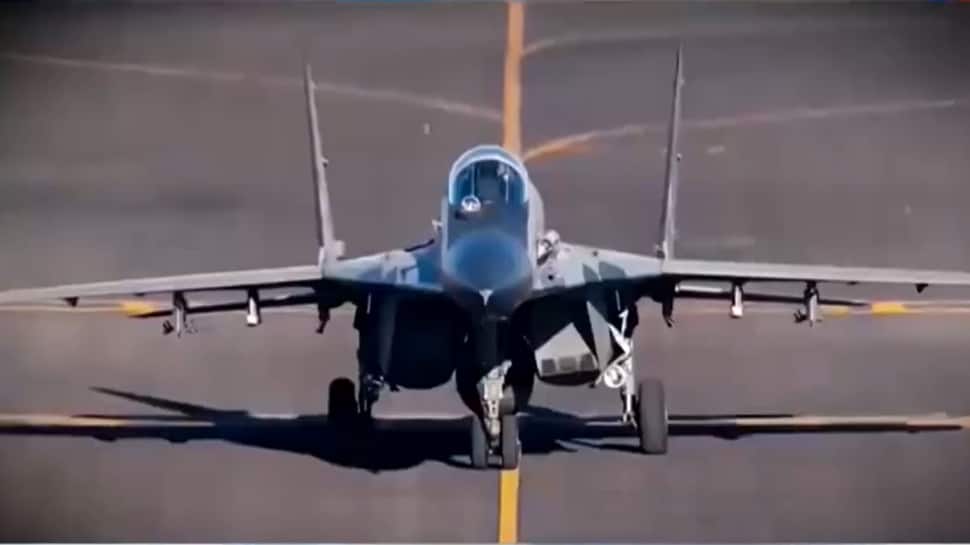
Inda’s 5th-Generation Fighter Jet: India has been receiving multiple offers – for the F-35 from the United States, Su-57 from Russia and Rafale from France. However, India is not keen on buying a 5th-generation jet and instead is focusing on indigenous development of the aircraft. India has taken a major leap toward developing its own 5th-generation fighter aircraft. The Defence Research and Development Organisation (DRDO) has successfully tested Morphing Wing Technology—a capability currently mastered only by a handful of countries in Europe and the United States. The breakthrough is expected to significantly accelerate India’s Advanced Medium Combat Aircraft (AMCA) program.
What Is Morphing Wing Technology?
Morphing wings allow a fighter jet to change the shape and size of its wings in real time. This is made possible using Shape Memory Alloy (SMA)—a special metal that expands when heated and contracts when cooled. Through this mechanism:
* The jet can extend its wings to increase lift and maneuverability
* Or shrink and fold its wings to reduce radar visibility and enhance stealth during missions
According to DRDO scientists, SMA-enabled wings can reshape themselves in just 0.17 seconds, shifting at a speed of nearly 35 degrees per second.
Why Is This Technology Crucial?
5th-generation fighter jets worldwide rely on three core capabilities:
* Stealth and low radar signature
* Adaptive aerodynamics
* High-speed agility
Morphing wing technology enhances all three. A jet with retractable or shape-changing wings appears smaller to enemy radars, making it harder to detect. Nations like the United States (F-35), Russia (Su-57), and China (J-35) boast similar high-end technologies, but only a few have mastered advanced morphing structures.
With this success, India joins an elite group working on such next-generation systems.
Boost to AMCA—India’s Future 5th-Gen Stealth Fighter
The AMCA program—jointly developed by DRDO and ADA—aims to build India’s first true 5th-generation stealth fighter featuring:
* Supercruise capability
* Internal weapons bay
* Advanced stealth shaping
* AI-assisted avionics
Morphing wings will significantly enhance AMCA’s aerodynamic efficiency, stealth profile, and mission flexibility. Experts believe this technology could also be integrated into India’s upcoming unmanned combat aircraft, giving them superior survivability and stealth.
One may recall that DRDO recently reached a significant milestone with the first successful high-speed rocket-sled test of an indigenously developed fighter jet ejection seat system—marking a major advancement in India’s ability to design and validate next-generation pilot safety technology.
Strategic Impact
India has already demonstrated indigenous capability through the Tejas fighter program. Now, with morphing wing technology, the nation strengthens its long-term aerial combat preparedness and reduces dependence on foreign suppliers.
Defense analysts say this breakthrough will cause discomfort among rival nations, particularly China and Pakistan, as India moves closer to matching global 5th-generation standards.
About the Author