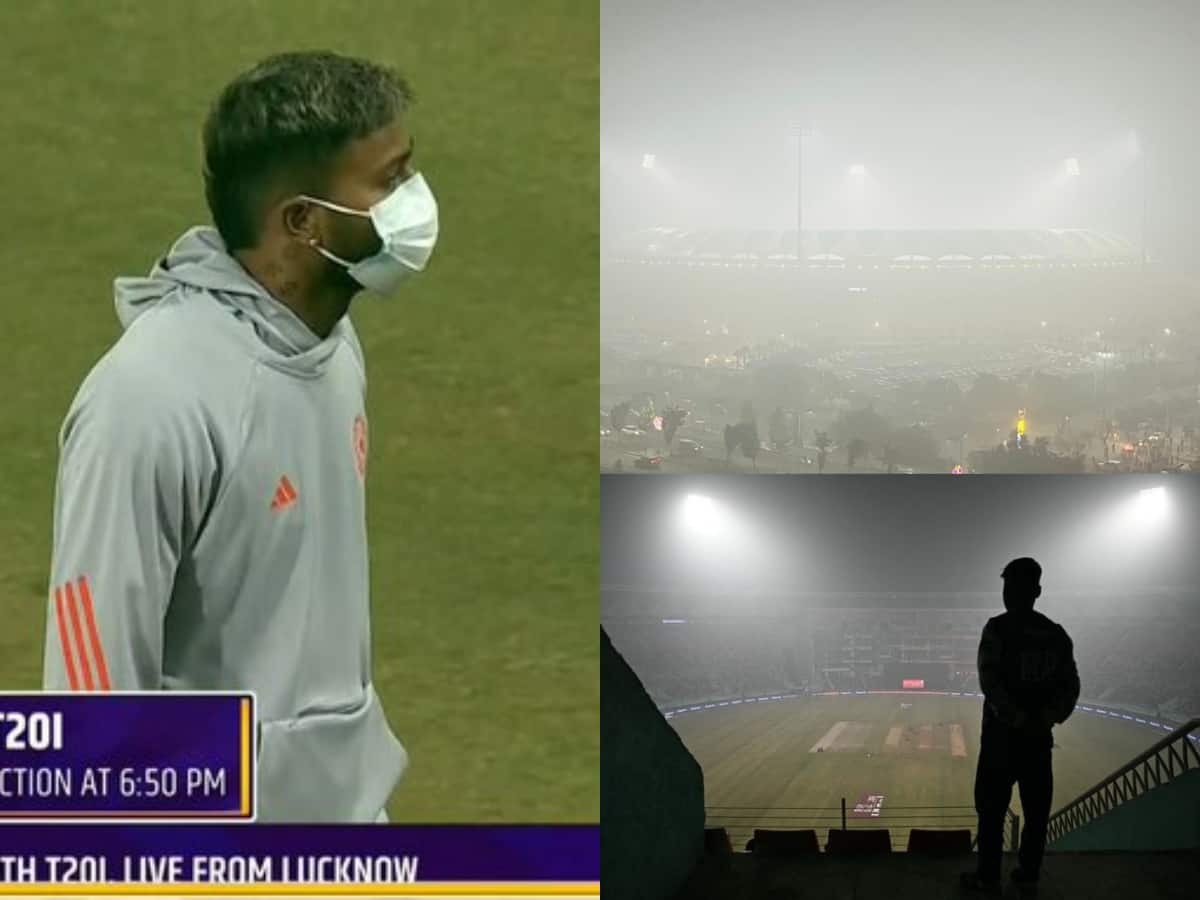
The Board of Control for Cricket in India moved quickly to respond to mounting fan criticism after the fourth T20I between India and South Africa in Lucknow was abandoned without a ball being bowled due to heavy smog. BCCI vice president Rajiv Shukla assured that weather conditions and pollution levels will be given greater importance while planning future international schedules. The match at the Ekana Stadium sparked widespread outrage among fans, with many questioning the decision to host multiple winter internationals in north India. Following the washout, Shukla addressed the issue in an exclusive interaction with India Today, acknowledging the disappointment caused by the cancellation.
“The Lucknow T20I was cancelled, and everyone is disappointed about it. All preparations were in place, everything was ready, and inspections were carried out right till the last moment. After that, the match was called off due to fog,” Shukla said.
ALSO READ – Meet Most Expensive Uncapped Players Ever In IPL History; Two Stars Combined Got Higher Than Rishabh Pant In 2026: From Prashant Veer To Avesh Khan : Check In Pics
What Really Happened?
The game was scheduled for a 7 pm start, but persistent poor visibility delayed the toss. Match officials conducted nearly six separate inspections before finally calling off the contest at around 9:30 pm. Throughout the evening, air quality levels remained in the hazardous category, raising concerns about player safety and spectator comfort.
Shukla admitted that the period from mid December to mid January presents recurring challenges for cricket in northern India and said this must be factored into future scheduling decisions.
“Fog is a very big problem from December 15 to January 15. So I feel that while rescheduling in the future, this aspect will also have to be kept in mind,” he added, while also pointing out that India’s vast geography offers flexibility when choosing venues.
Shukla Tried To Communicate
As delays continued during the Lucknow T20I, Shukla was seen walking onto the field and towards the centre of the ground, where umpires were conducting repeated visibility checks. He appeared visibly concerned while speaking with match officials as inspections continued before the game was officially abandoned at 9:30 pm.
The BCCI vice president also highlighted that pollution is not limited to a single city. He noted that air quality issues affect the National Capital Region and several parts of Uttar Pradesh, explaining that smog significantly hampers on-field visibility. Fielders, in particular, struggle to track the ball near the boundary or judge high catches under such conditions.
Fans, meanwhile, took to social media to express their frustration, questioning why contingency options such as alternate venues or revised start times were not considered. Many supporters, who had travelled to the stadium and waited for hours in cold and polluted conditions, felt shortchanged by what they believed could have been avoided with better planning.
About the Author