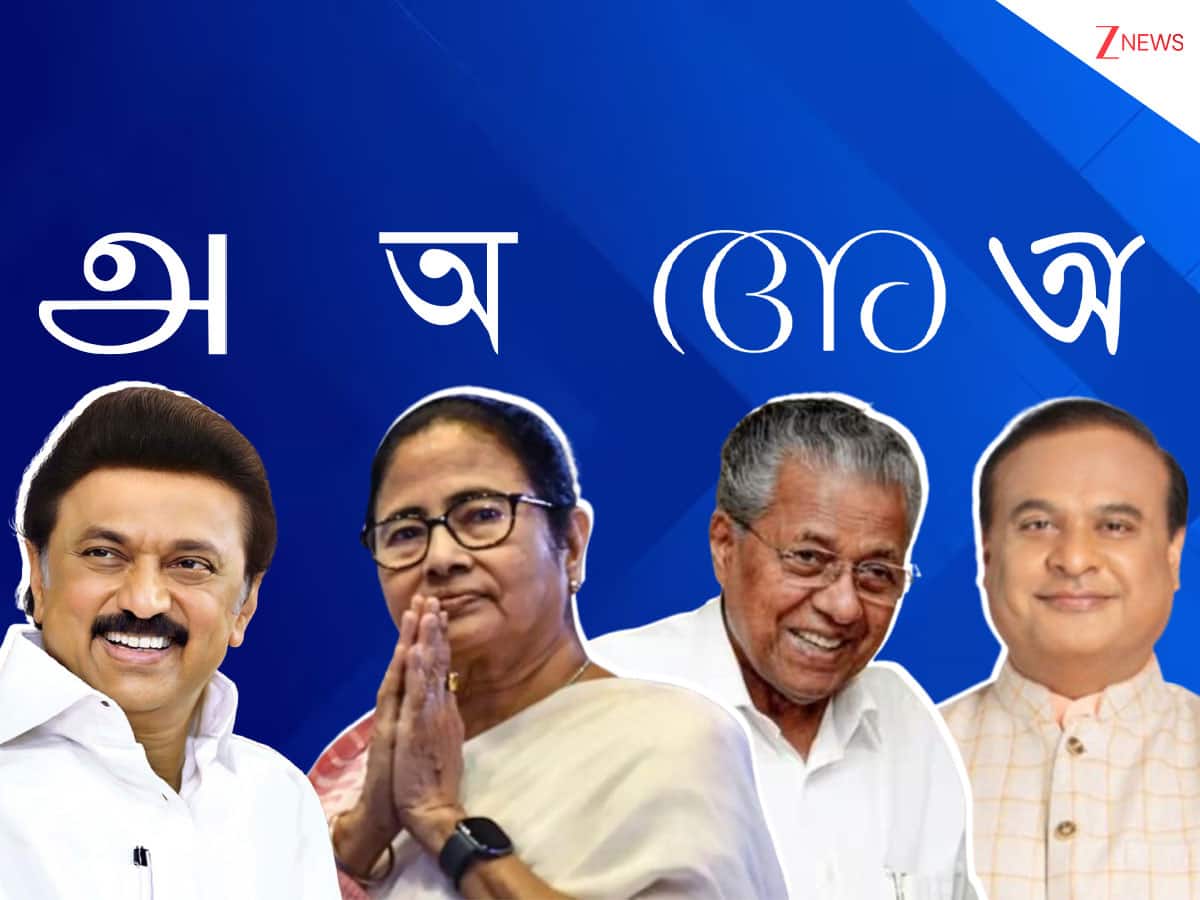
In a country as diverse as India, where people of multiple religions, languages, and cultural backgrounds coexist, one particular identity consistently emerges as a decisive factor during elections: ‘regional identity’. Beyond ideology and narratives, regional identity often acts as an emotional and cultural anchor for citizens.
In many ways, sometimes voters may perceive regional parties as protectors of their interests, especially in a democratic system. This dynamic explains why regional identity resurfaces strongly during election seasons.
As India approaches crucial Assembly elections in 2026, the enduring influence of regional identity in shaping political outcomes comes into focus.
Also Read- Kerala Polls: Can BJP’s ‘Watershed Moment’ In Thiruvananthapuram Hurt Congress, Left Ahead Of Assembly Elections?
Regional Identity in Indian Politics
According to Dr. Josukutty C.A., Professor and Head of the Political Science Department at Kerala University, regional identity is not a new or emerging phenomenon in India. He describes the country as a collection of multiple identities bound together by an overarching Indian identity. Cultural factors such as language, religion, caste, and geography form the foundation of political mobilisation.
Dr. Josukutty explained that voters often exercise their choices in alignment with identities they feel closest to, supporting parties that reflect their cultural and social backgrounds. “Identity becomes both a means of empowerment and a tool for protecting economic, political, and social interests, making it a fundamental factor in political organisation,” he noted.
Regional parties often outperform national parties at the state and local levels because they are more closely connected to ground realities. Dr. Josukutty pointed out that regional parties directly cater to local concerns. In Kerala, for instance, several regional parties have represented the interests of farmers and local communities by focusing on geography-specific and agriculture-related issues.
Explaining why regional identity remains strong despite high-profile national campaigns, Dr. Josukutty highlighted Tamil Nadu’s Dravidian movement, where politics is deeply rooted in linguistic and cultural identity. “The Tamil language continues to be a powerful rallying point, especially when national narratives are perceived as privileging Hindi or Sanskrit,” he said. Similar identity-driven politics can be seen in Assam and West Bengal, where demography, ethnicity, and region-specific economic interests heavily influence political alignment.
However, Dr. Josukutty emphasised that national parties are not detached from this reality. Even national parties adapt their messaging and strategies to suit different states, whether in Gujarat, Uttar Pradesh, Bihar, or Assam, demonstrating that regional identity remains unavoidable in Indian politics.
Language Politics in India
When discussing regional identity, language politics cannot be ignored. India’s linguistic diversity, with languages like Bengali, Marathi, Gujarati, Hindi, Tamil, Telugu, and Kannada, shapes both culture and political behaviour. In Karnataka, the Kannada vs Hindi row has been a trigger point for many political groups, and the same goes on in Maharashtra, where Marathi is being enforced by certain groups. In Bengal, Bangali vs Bahari (outsider) has been the Trinamool Congress’ plank, while in Telangana and Andhra Pradesh, Telugu has been key to power, with regional parties doing well.
Assistant Professor Dr. K. Karthik of Karnataka Central University explained how language identity continues to influence political discourse, particularly in southern states like Tamil Nadu, Karnataka, and West Bengal. He said, “Regional identity and language have always been part of Indian politics. People do not vote purely based on employment or economic growth. Language is tied to cultural heritage and identity, and it can influence voting patterns, but it is not the only factor.” He added that core issues like jobs and development still play a deciding role, while linguistic pride and heritage remain relevant considerations for voters.
Language politics is often used as a tool for cultural pride and political mobilisation. Dr. Karthik explained, “Closer to elections, parties often emphasise language issues depending on who their opponents are and the type of election, whether Lok Sabha or state assembly. The current ruling party also foregrounds language concerns, citing programs like the NEP and bills tabled in Parliament.”
Social media also plays a role in spreading language discourse, though mostly short-term. “Social media does showcase linguistic diversity in cities like Bangalore, Hyderabad, and Chennai. However, viral content, negative or positive, is temporary and often replaced by new debates,” Dr. Karthik noted.
Regarding election coalitions, Dr. Karthik suggested that language politics is unlikely to decisively shape alliances. “While language issues occasionally dominate discussions, particularly in states like Tamil Nadu or Karnataka, they are often orchestrated to divert attention from larger core issues. Religious identities may play a larger role in coalition strategies than language alone,” he said.
In conclusion, to understand the concept of ‘regional identities’ in a vast nation, one must look at it from more than one angle. Notably, language politics plays an important role in cultural pride and regional identity; it interacts with broader issues like development, employment, and governance. Understanding how parties leverage linguistic identity, alongside other socio-political factors, is essential to understanding the evolving dynamics of Indian elections and voter behavioural trends.
The rival’s claim that the BJP is an outsider has hurt the saffron party’s prospects in states like West Bengal, Tamil Nadu, and Kerala in the past. The BJP has worked on strengthening its regional leadership by roping in rebels and building its cadre for long in these states. The results have improved, but still, the party has a lot of ground to cover as voters are still sceptical about the BJP and its ideology.
About the Author