Rajasthan has always been a land of spectacle, its forts, palaces, and festivals etched into the global imagination. The government’s new tourism policy has significantly expanded the scope of tourism. Special focus is now being given to sectors such as wedding tourism, wellness and spiritual travel, adventure tourism, religious tourism, and rural tourism. Through public–private partnerships, investors have also been brought on board, which is boosting hotels, travel services, events, and local businesses. This is directly benefiting youth, women, and small entrepreneurs, who are able to earn a steady income by connecting with the tourism sector.
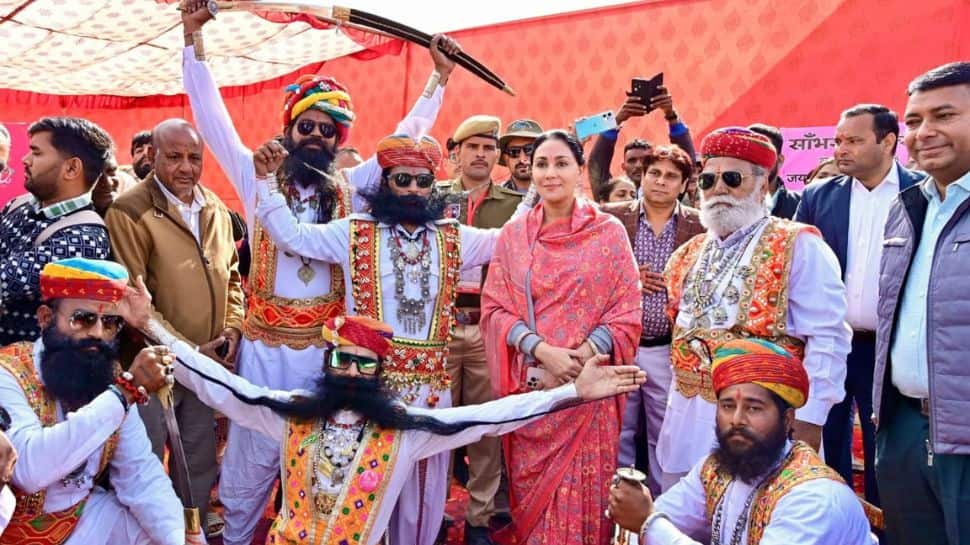
Diya Kumari on Saturday also inaugurated the five-day Sambhar Festival , asserting that the historic town is emerging as a global tourist destination. After inaugurating the event, Diya Kumari said, “Sambhar has created a distinct identity on the global tourism map. Its unique natural beauty and biodiversity make it a major attraction for domestic and international tourists.”
Rajasthan, long known for its forts, palaces, and festivals, is now emerging as an example of this new tourism model. Deputy Chief Minister and Tourism Minister Diya Kumari has put emphasis on connecting tourism with the people. In regions like Shekhawati, historic havelis are being preserved and integrated into tourism, while lesser-known areas such as Banswara and Dungarpur are also being promoted. As a result, employment opportunities are being created beyond Jaipur, Udaipur, and Jodhpur as well.
Taking charge at a moment when global travel was rapidly evolving, the Deputy CM noted that legacy alone could no longer sustain momentum and Rajasthan needed to be more accessible, more diverse, and more attuned to contemporary traveller expectations. This vision translated into the launch of Rajasthan Tourism Policy 2025, a framework that expanded and strengthened the state’s tourism portfolio across heritage, wedding, wellness, adventure, religious, rural, and emerging niche segments, while unlocking investment through public-private partnerships.
In regions such as Shekhawati, the government has also initiated structured surveys to identify clusters of historic havelis, working closely with property owners to ensure preservation without stifling use. The insistence on retaining original facades and architectural character, even during restoration or repurposing, signals a commitment to authenticity, while efforts to secure UNESCO World Heritage status underline global ambition.
Notably, Diya Kumari has said that her focus is also on increasing international tourist arrival and thus the state government organised events like international outreach, digital branding, and global events such as ITB Berlin (Germany) and World Travel Market (WTM) London 2025, etc. Rising tourist footfalls reflect growing confidence in Rajasthan as a destination that honours its past while confidently engaging the future.
Focused upgrades at major pilgrimage sites such as Khatu Shyam Ji, improved road connectivity, new airstrips, a tourist safety app, and a strengthened Tourist Assistance Force have enhanced both access and visitor confidence. Statewide cultural festivals and initiatives have created sustained opportunities for folk artists, women performers, and artisans, embedding culture into the tourism economy rather than relegating it to display.
About the Author