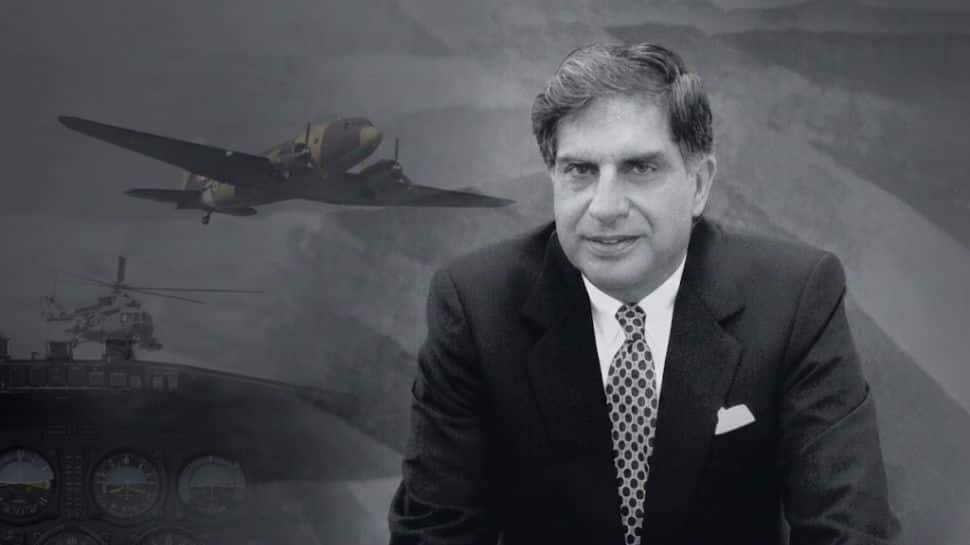
Ratan Tata, the legendary chairman of Tata Group, was not just a business leader but also a skilled pilot. He earned his pilot’s license during his student days at Cornell University in the US. This passion for flying shaped his adventurous side and left a lasting mark on India’s aviation story.
While studying architecture at Cornell in the 1960s, Ratan Tata discovered his love for aviation. He trained and got his pilot’s license, often flying small planes. Once, he faced a scary moment when his single-engine plane’s motor failed mid-air. Calmly, he made an emergency landing at Ithaca airport with classmates aboard. Tata later shared this tale at a Cornell reunion, showing his quick thinking.
Thrilling Fighter Jet Flights
In 2007, at age 69, Ratan Tata made history at Bengaluru’s Aero India show. He became the first Indian civilian to fly an F-16 fighter jet, co-piloting with a Lockheed Martin expert for 35 minutes. Flying low at 500 feet and 600 knots thrilled him. “Exhilarating,” he called it. The next day, he flew a Boeing F-18 Super Hornet for an hour, wearing a G-suit.
Building Aviation Dreams in India
Back home, Tata boosted flying in 1965 by starting the Jamshedpur Cooperative Flying Club. It trained new pilots and grew aviation interest. Following his uncle JRD Tata—India’s first licensed pilot—he helped launch Vistara airline with Singapore Airlines. These steps showed his commitment to skies beyond business.
Ratan Tata’s pilot skills highlighted his bold spirit. From emergency landings to jet flights, he inspired many.
He joined the Tata Group in 1962, starting his career on the shop floor at Tata Steel. He slowly worked his way up and became the director-in-charge of National Radio and Electronics (Nelco) in 1971. In 1981, he was appointed Managing Director of Tata Industries, where he focused on bringing new technology and modern ideas into the group.
(Also Read: Ratan Tata’s 88th Birth Anniversary: IT Giant TCS To Become World’s Largest AI-Led Tech Services Firm; AI Revenue Hits Rs 1,35,24,37,50,000, Head Of New AI Unit Is…)
Ratan Tata Turns Tata Into Global Giant
In 1991, Ratan Tata took over as Chairman of Tata Sons, succeeding J.R.D. Tata. This was also the time when India began economic reforms. Under his leadership, the Tata Group went through major changes. He introduced a retirement age for senior leaders, streamlined operations, and strengthened the group’s structure. During his 21-year tenure, the group’s revenue grew nearly 40 times, and profits increased about 50 times.
He played a key role in turning the Tata Group into a global company. Major international acquisitions under his leadership included Tetley Tea in 2000, Corus Steel in 2007, and Jaguar Land Rover in 2008. These moves helped Tata expand its presence across the world, with over 65% of its revenue coming from international markets.
He also led the launch of the Tata Nano, once known as the world’s most affordable car, and expanded the group into telecom services through Tata Teleservices. His leadership transformed the Tata Group into one of the world’s most respected and diversified business houses.
About the Author