Moscow: India may not have shown much enthusiasm for Russia’s Su-57E fifth-generation fighter jet so far, but Moscow continues to pitch the aircraft as a long-term solution for the Indian Air Force (IAF). The latest offer has come from Vadim Badekha, CEO of United Aircraft Corporation (UAC), the company behind the Su-57 programme.
Badekha said the Su-57 has been designed to stay operational for four to five decades, making it suitable for the IAF’s long-term requirements. According to him, the aircraft’s strength lies in its long service life, adaptable design and ability to absorb future technologies as aerial combat evolves.
He explained that a service life of 40 to 50 years means the jet will remain relevant even as air warfare technologies change over time. The Su-57, he said, is already a mature fifth-generation platform, equipped with stealth features, advanced electronics, powerful sensors and the ability to handle multiple combat roles.
Russia Renews Su-57 Offer To India
The UAC chief said the Su-57 is capable of carrying out air-to-air missions, air-to-ground strikes and electronic warfare tasks at the same time. He described it as an aircraft built not only for today’s battlefield but also with future high-tech air combat in mind.
He said Russia views the Su-57 as an “evolving platform” rather than a fighter that would need early retirement. Work to further enhance the aircraft has not slowed down, he added, and engineers are continuing to upgrade its systems to keep it ahead of emerging threats.
What The Su-57 Can Do
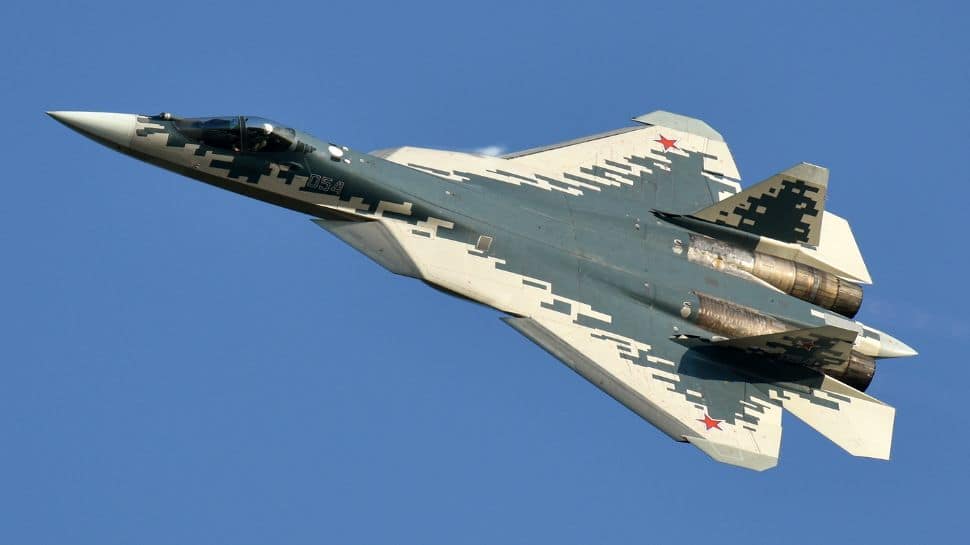
The Su-57 is Russia’s fifth-generation stealth fighter, designed to reduce radar detection. It can perform air-to-air and air-to-ground missions simultaneously and is capable of supercruise, allowing it to fly at supersonic speeds without using afterburners.
The aircraft is fitted with an advanced Active Electronically Scanned Array (AESA) radar and multi-spectrum sensors, along with a powerful electronic warfare system that can disrupt enemy radar networks. Built for network-centric warfare, it can share data with other platforms in real time.
One of its key features is the ability to operate along with unmanned systems. The Su-57 can team up with drones, command them during missions and coordinate complex operations. Its internal weapons bays allow it to carry missiles while maintaining stealth. It can be armed with long-range air-to-air and air-to-ground weapons.
Badekha said the jet’s design allows continuous upgrades, extending its service life for decades. Instead of waiting for an entirely new sixth-generation fighter, Russia is treating the Su-57 as a base platform that can gradually absorb new technologies. These include improved sensors, more advanced electronic warfare tools, stronger networking capabilities and new propulsion concepts.
He also pointed to the growing role of manned-unmanned teaming in future air combat. According to Badekha, the Su-57 is expected to function as an airborne command centre in the years ahead. It is capable of controlling and guiding multiple drones during combat missions.
About the Author