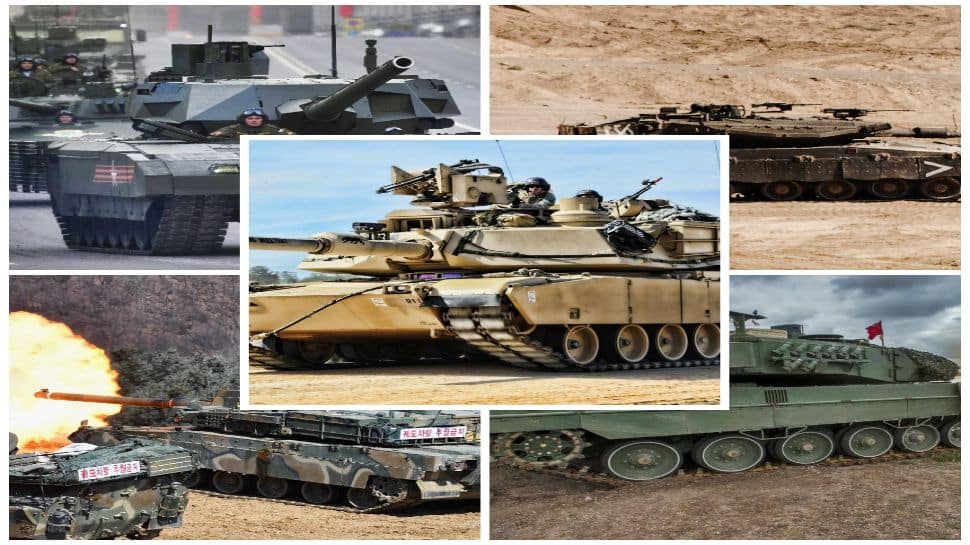
World’s Most Lethal Battle Tanks: In an era dominated by drones, precision-guided munitions and electronic warfare, battle tanks still have their role in modern armies. A perfect blend of firepower, mobility and protection, today’s top tanks are designed to seize territory, protect infantry and deliver overwhelming firepower from a highly mobile platform.
While the battlefield has evolved, tanks with advanced armour, high-tech sensors and integrated battlefield systems are essential. Their ability to dominate land engagements and work seamlessly with other units ensures that main battle tanks continue to influence military strategy worldwide.
So, which tanks lead the global rankings in 2026? Experts consider firepower, survivability, electronics, mobility and real-world combat performance as the key criteria. Here are the five best tanks defining modern armored warfare today.
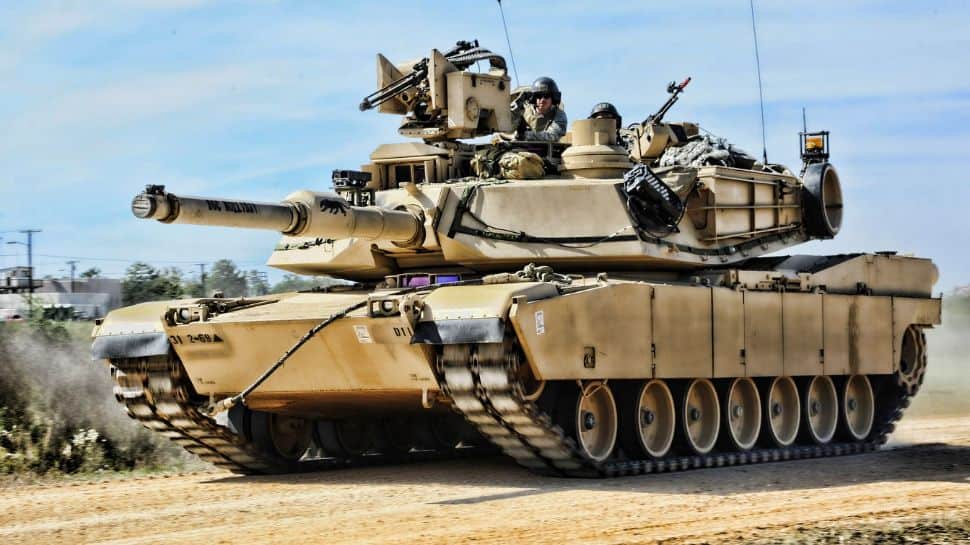
1. USA’s M1A2 SEPv3 Abrams: The King Of Battlefield
(Image Source: US Army)
The M1A2 SEPv3 Abrams represents the pinnacle of Western armoured design. This latest System Enhancement Programme (SEP) iteration integrates explosive reactive armour, the Trophy APS and advanced anti-drone defenses. Its third-generation Forward-Looking Infrared (FLIR) targeting system allows the crew to strike from long ranges while remaining hidden from the enemy.
The tank’s M256 120mm smoothbore gun can fire advanced kinetic-energy penetrators (APFSDS-T) capable of defeating modern reactive armour at distances up to 4,000 metres. Additional armament includes a .50-caliber M2 and a 7.62mm M240B coaxial machine gun.
Powered by a 1,500-horsepower Honeywell AGT1500 turbine, the Abrams combines raw power with sophisticated onboard systems, including an auxiliary generator that operates silently for stealth missions. These enhancements ensure that the Abrams will continue to dominant force on the battlefield through 2040, solidifying its reputation as the world’s premier main battle tank.
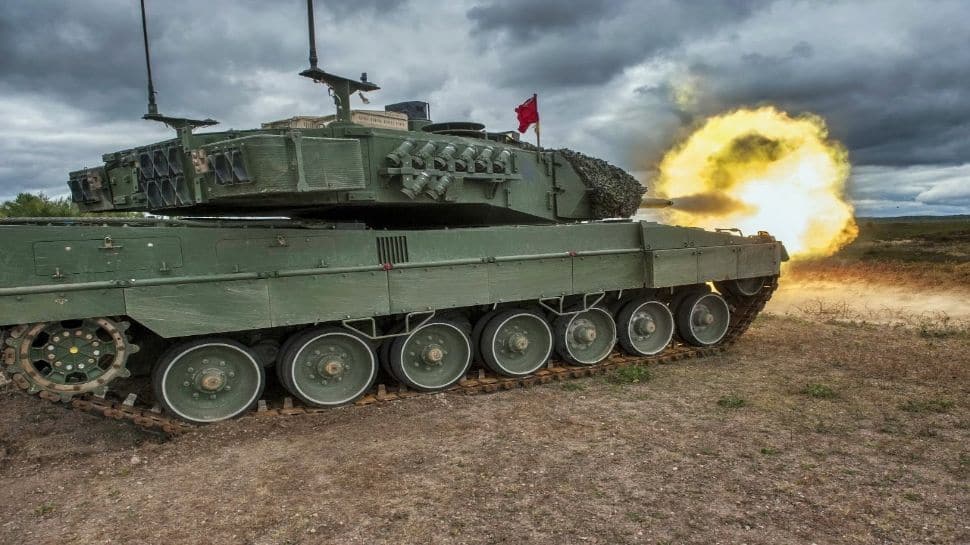
2. Germany’s Leopard 2A7V: Precision And Protection Combined
(Image Source: Creative Commons)
Germany’s Leopard 2A7V is the pinnacle of modular design and battlefield adaptability. Weighing around 66.5 tonnes, it boasts an MTU 1,500 HP engine, improved L/55A1 main gun and advanced sensor suites for situational awareness. The modular armour protects against RPGs, mines and modern anti-tank weapons, while the remote-controlled FLW 200 machine gun adds flexibility in urban environments.
Recent upgrades include programmable high-explosive ammunition, third-generation FLIR targeting and integration of the Israeli Trophy APS that enhance survivability against guided missiles. Analysts argue that the Leopard 2A7V is arguably the best tank in the world, rivalled only by the M1 Abrams.
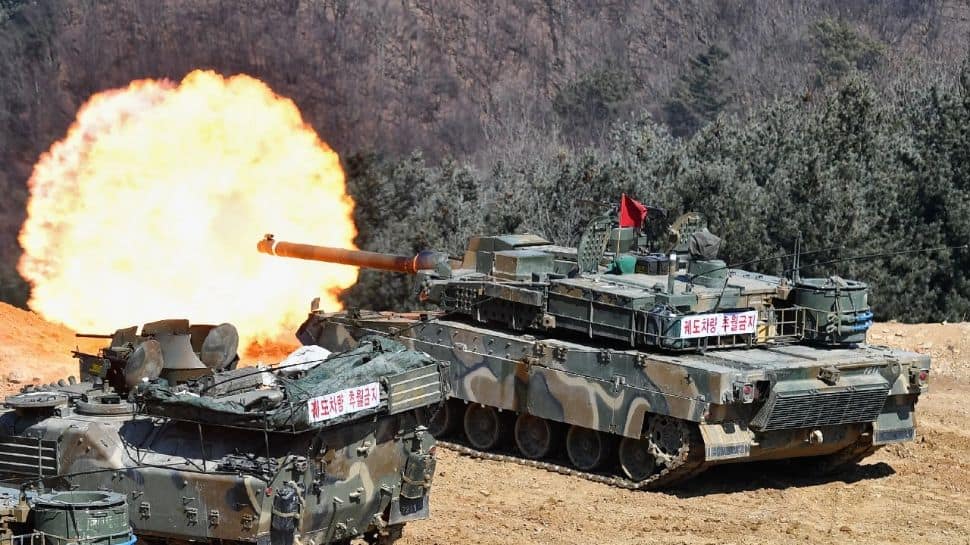
3. South Korea’s K2 Black Panther: High-Tech Mobility And Firepower
(Image Source: Creative Commons)
The K2 Black Panther stands out for its agility, electronics and lethal versatility. Launched by Hyundai Rotem in the 2010s, it integrates advanced sensors, a 120mm smoothbore main gun and a sophisticated fire-control system capable of tracking targets at nearly 10 km. Its radar and thermographic cameras enhance survivability by detecting incoming threats and activating countermeasures.
The K2’s armour uses steel and silicon carbide ceramics, while its 1,500-horsepower engine enables speeds up to 43 mph with a range of 280 miles. A unique snorkel system allows the tank to traverse rivers over 4 metres deep, a capability surpassing most Western MBTs.
Its $8.5 million price tag shows its cutting-edge technology, making it one of the most advanced and expensive tanks in service today.
Poland has recently adopted the K2 as a core part of its armoured forces, signalling global recognition of its battlefield superiority.
4. Israel’s Merkava Mark 4: Designed Around Crew Survival

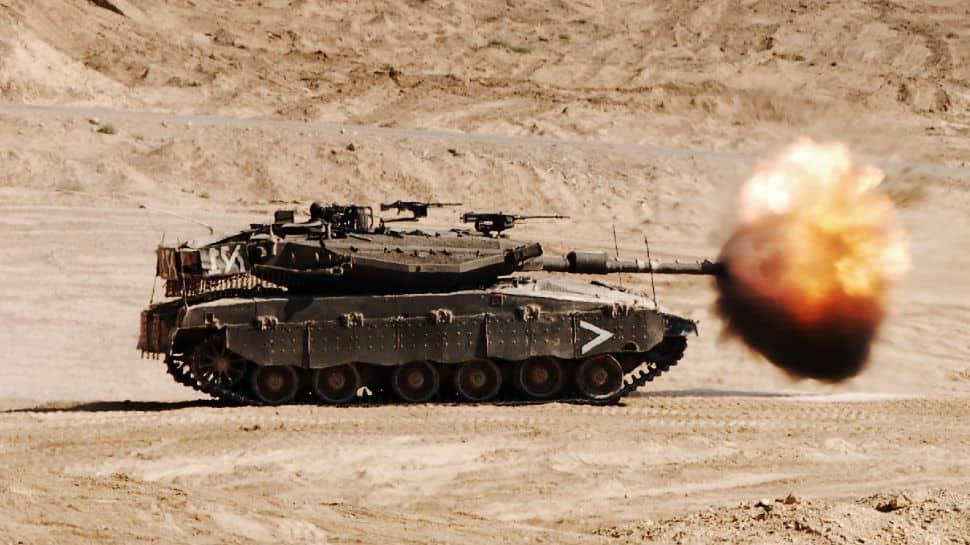

(Image Source: Creative Commons)
Israel’s Merkava Mark 4 is an engineering marvel. It is crafted to protect its crew in conflict zones while maintaining formidable firepower. Its unique front-mounted engine protects the crew from frontal attacks, while rear clamshell doors allow for infantry transport or rapid escape. The modular design ensures easy repair in combat conditions, a feature tested repeatedly in Gaza and Lebanon.
The tank is equipped with an IMI 120mm smoothbore gun, which is capable of firing all standard Western ammunition and the LAHAT anti-tank guided missile. Defensive systems include the Trophy APS, roof-mounted 7.62mm machine guns, a 60mm mortar and a remote-controlled .50-caliber heavy machine gun.
The Merkava’s combat record speaks for itself. In urban warfare scenarios, such as Gaza and Lebanon, it has withstood multiple hits while keeping crew casualties low, proving its emphasis on survivability is more than just theory.
5. Russia’s T-14 Armata: Ambitious But Unproven
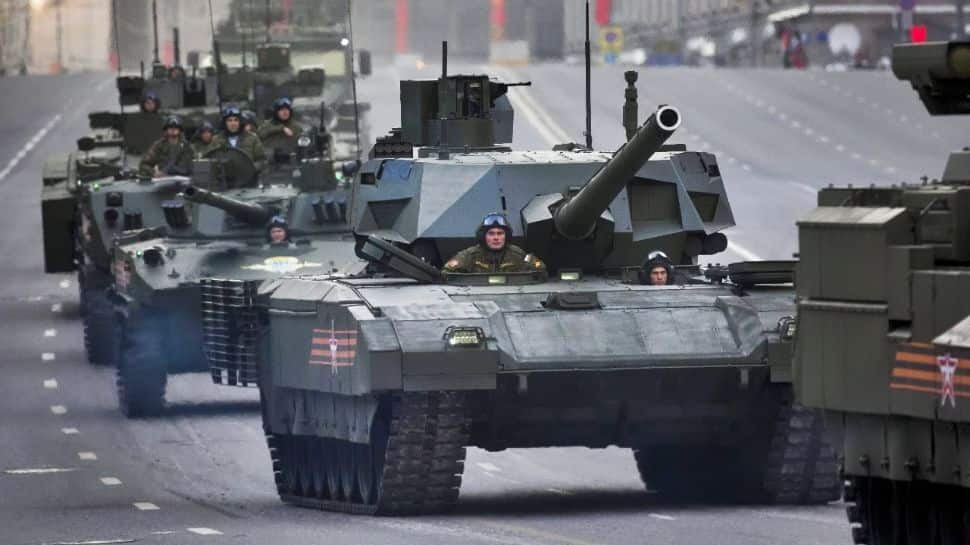
(Image Source: Creative Commons)
First unveiled at Moscow’s 2015 Victory Day Parade, the T-14 Armata immediately captured global attention. It promised to leapfrog Western tanks with its unmanned turret, advanced sensors and a crew-protecting central compartment. The 125mm smoothbore gun can fire both conventional rounds and anti-tank guided missiles, controlled electronically from the protected crew shell.
Sergey Ptichkin of Rossiyskaya Gazeta highlighted that the T-14’s crew compartment features “multilayered and combined armour protection that can withstand a direct hit from any type of round that exists today”.
Additional defenses come from the Afghanit Active Protection System (APS), which is capable of intercepting incoming projectiles before they strike.
Despite its technological promise, the T-14’s real-world performance has been limited. Its sparse deployment in Syria and selective use in Ukraine raise questions about its operational reliability. Russian autoloader vulnerabilities, particularly the risk of catastrophic turret explosions, is a concern. The Armata is ambitious and theoretically advanced, but practical combat effectiveness is still unproven.
About the Author