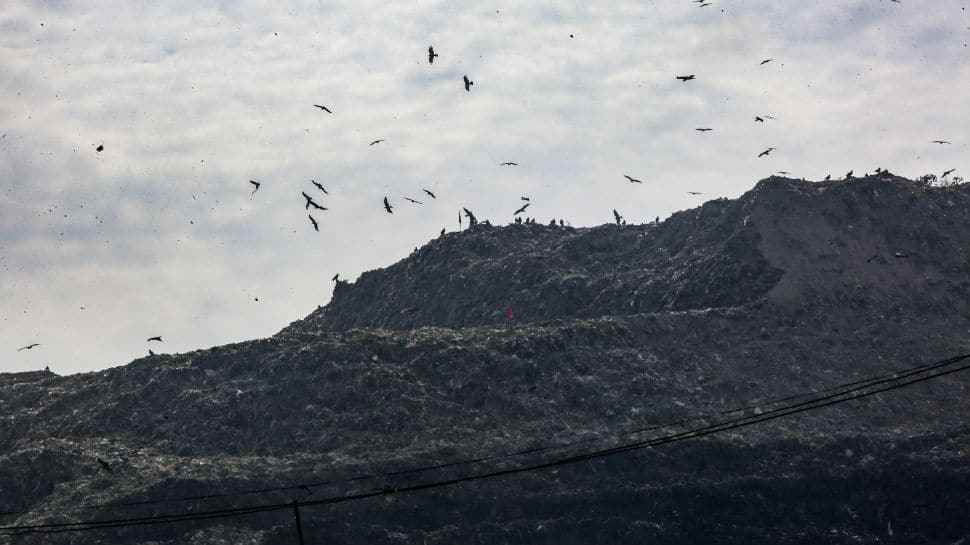
New Delhi: Delhi processes only about 64 per cent of its daily municipal waste, with the remaining garbage continuing to be dumped at the overflowing Bhalswa and Ghazipur landfills, the Central Pollution Control Board has informed the National Green Tribunal.
In an affidavit submitted to the tribunal, the CPCB said the national capital generates 11,852 tonnes of municipal solid waste every day, but processes just 7,611 tonnes, leaving a shortfall of 4,241 tonnes that ends up at the two major dumpsites.
The disclosure was made in response to a suo motu case taken up by the NGT following a media report highlighting persistent garbage accumulation and foul odour in parts of southeast Delhi, including Shaheen Bagh and Sarita Vihar.
Citing the Delhi Pollution Control Committee’s (DPCC) annual report for 2024–25, the CPCB noted that while the city has an installed waste processing capacity of 8,173 tonnes per day, actual processing remains significantly lower. As a result, nearly 36 per cent of daily waste continues to be disposed of at landfills.
The CPCB told the tribunal that plans are in place to add 7,750 tonnes per day of additional processing capacity between 2025 and 2028 to address the existing gap and future waste management needs.
Referring to the Solid Waste Management Rules, 2016, the pollution watchdog clarified that the primary responsibility for collection, segregation, transportation and processing of municipal waste lies with the Municipal Corporation of Delhi, while enforcement of the rules rests with the Delhi Pollution Control Committee.
The CPCB also pointed out that in February 2023, the NGT had set up a Solid Waste Monitoring Committee for Delhi, headed by the Lieutenant Governor, to oversee waste management operations, including the creation of new processing facilities and remediation of legacy dumpsites.
The green tribunal took suo motu cognisance of the issue in July after reports claimed garbage had remained uncollected for several days in parts of southeast Delhi, leading to health concerns and persistent stench. Observing that the situation could attract provisions under multiple environmental laws, the NGT issued notices to the CPCB, DPCC, MCD and the District Magistrate of South East Delhi.
About the Author