New Delhi: US President Donald Trump declared on Saturday (January 3) that the United States will “run Venezuela” until a “safe, proper and judicious transition” of power can take place.
It is unclear exactly how the United States plans to govern Venezuela or who will be involved in this effort, but President Donald Trump described it as a “collective” undertaking. He said that US Secretary of State Marco Rubio has been in talks with Venezuelan Vice President Delcy Rodríguez, who was later appointed interim president by Venezuela’s Supreme Court.
He claimed that Rodríguez had expressed willingness to “do whatever America says”. However, she later appeared on state television, insisting that Maduro is the country’s “only president” and demanding his immediate release.
Trump also confirmed that he has not spoken with Venezuelan opposition leader Maria Corina Machado, whom he said lacks both the support and respect to lead the country. Machado, in 2024, had previously supported Edmundo Gonzalez in his presidential bid. Official vote counts showed that Gonzalez had won by a wide margin.
Trump’s Accusations Against Maduro
Since beginning his second term in January last year, Trump has intensified pressure on the Venezuelan government. Early in his term, the administration doubled the reward for information leading to Maduro’s capture.
In September, US forces began targeting ships alleged to be carrying drugs from South America. More than 30 strikes were carried out across the Caribbean Sea and Pacific Ocean, leaving over 110 people dead.
The Trump administration has held Maduro responsible for the millions of Venezuelan migrants arriving in the United States. Without providing evidence, he accused the Venezuelan president of forcing prisoners from jails and psychiatric hospitals to migrate to the United States.
The US president has also alleged that the Venezuelan government uses revenue from its oil sector to fund drug-related crimes and described Maduro as a cartel leader himself.
On Saturday, US Attorney General Pamela Bondi announced the charges against Maduro and his wife Cilia Flores. The Venezuelan president is accused of “narco-terrorism conspiracy, cocaine import conspiracy, possession of machine guns and dangerous devices and plotting against the United States with machine guns and explosives”.
Trump later framed these allegations as part of Maduro’s “deadly narco-terrorism campaign” targeting the United States and its citizens. He called him an “illegal dictator” and said he had demanded Maduro surrender a week before the attacks.
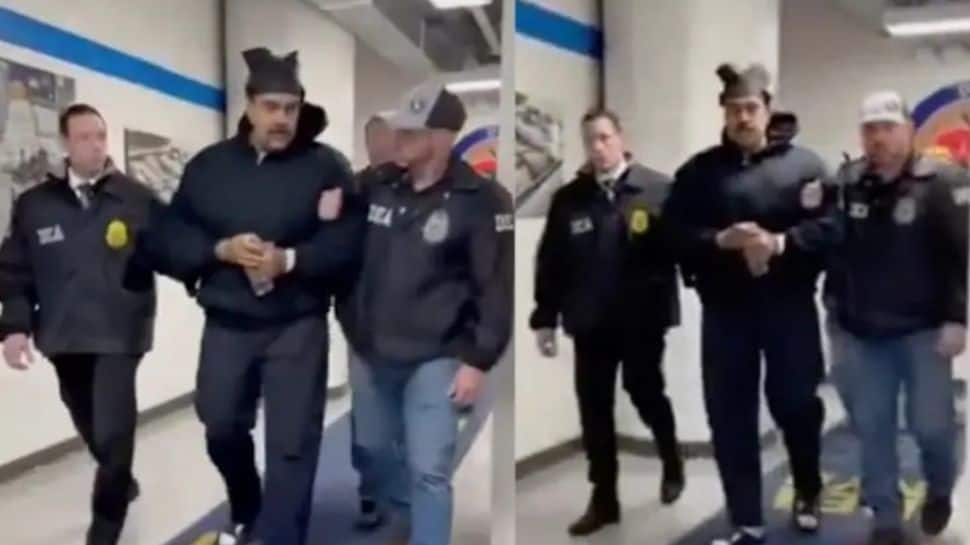
Bondi confirmed that Maduro and Flores will face US courts and justice on American soil. Both are presently being held at a detention centre in New York and will be presented in court on January 5.
The Venezuelan president has denied the allegations, accusing the United States of using the “war on drugs” as a pretext to remove him from power and gain control over Venezuela’s vast oil reserves.
Maduro’s Oil Allegations
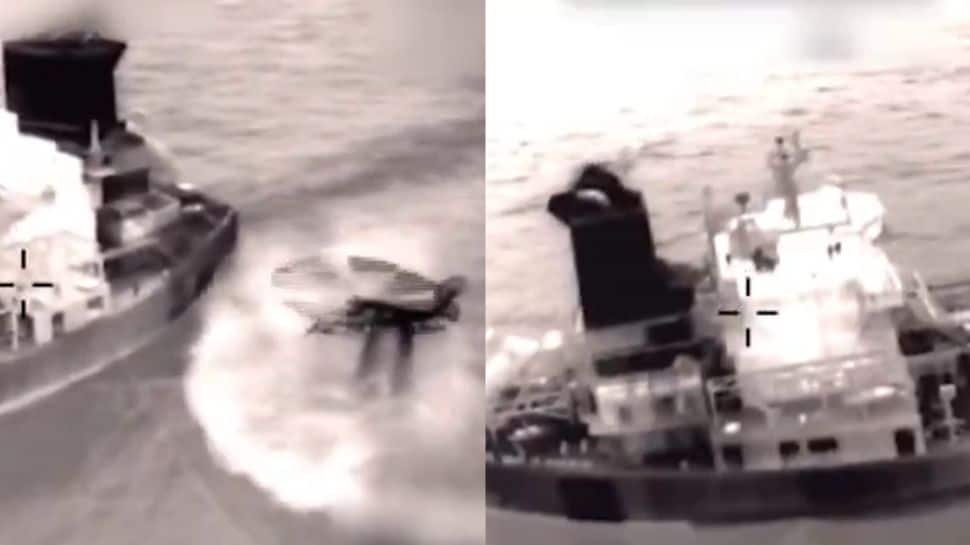
Maduro has long claimed that the Trump administration is attempting to seize Venezuela’s oil wealth. When the United States seized the first Venezuelan oil tanker off the country’s coast, the US president told reporters, “I think we’ll keep the oil for ourselves.”
US officials have previously denied that measures against the Maduro government are intended to take control of Venezuela’s oil reserves. However, sanctions and mismanagement have already impacted investment in the state-owned oil company.
According to the US Energy Information Administration (EIA), Venezuela accounted for only 0.8% of global crude oil production in 2023, exporting roughly 900,000 barrels a day, with China as its largest buyer.
Trump has made it clear that he wants American access to Venezuela’s oil fields. Venezuela is estimated to hold more than 300 billion barrels of reserves, the largest in the world. Much of this oil is heavy crude, expensive and difficult to extract, but Venezuela is the world’s fifth-largest exporter. Despite an increased US naval presence in the Caribbean, the country continued exporting about one million barrels per day to China, Southern Europe and the United States last month.
Political instability in recent months has affected production, and for decades the state oil and gas company, Petróleos de Venezuela (PDVSA), has struggled with strikes, mismanagement and poor safety standards. The United States has accused Maduro of using oil revenues to fund drug trafficking operations. While airstrikes have so far spared Venezuela’s oil fields, the country’s energy sector is expected to play a central role in any future scenario.
What Happens Next?
As always in such situations, the answer to what will happen next is uncertain. There is a huge amount of ambiguity, uncertainty and risk. Trump’s initial statements have surprised people both inside and outside the United States.
In US president’s words, Washington will “run Venezuela” until a “safe, proper and judicious transition” takes place. He indicated that talks have already taken place with Maduro’s allies and officials still in power, including Vice President Delcy Rodríguez, now acting president in Caracas. Trump described their response as “positive”.
However, Rodríguez declared on national television, “We will not become a colony of any empire”, stressing that Venezuela has only one president, Nicolas Maduro.
Trump also dismissed the Venezuelan opposition, including Nobel Peace Prize winner Maria Corina Machado, despite her international acclaim for promoting peace and democracy.
How will the “transition” happen? Venezuela’s military has long been a pillar of Maduro’s power. How will it act moving forward is unclear. Trump also hinted that if US troops need to deploy on the ground, he is not concerned.
Trump’s statements stand in contrast to promises he made earlier in his second term, when he pledged to be a president who would prevent wars rather than start them.
About the Author