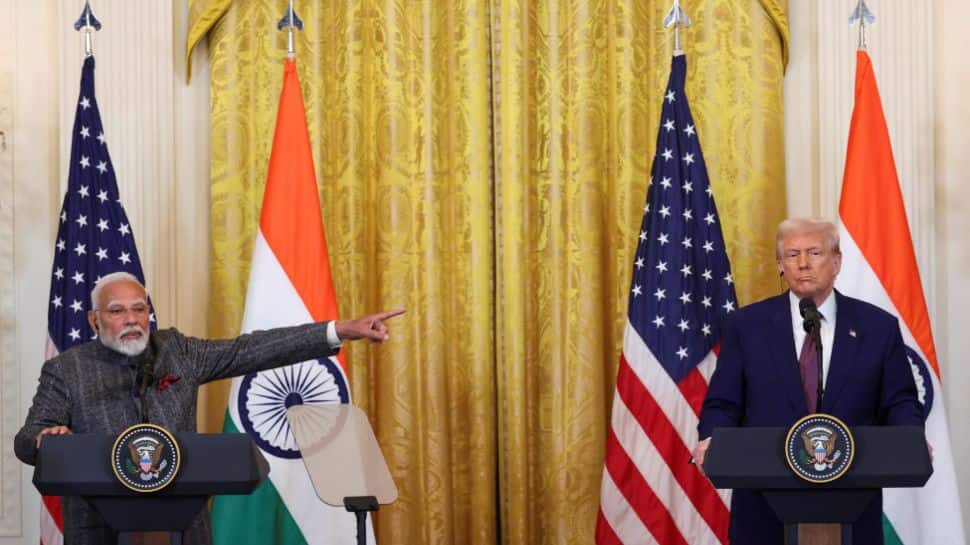
New Delhi: The US bombing of Venezuela and the capture of its president sent shockwaves rippling around the world. Several countries described the move as a “unilateral action” that violated the United Nations Charter and breached international law. During this global outcry, India issued a carefully worded statement that has drawn criticism from some quarters.
Roughly 24 hours after the US operation in Caracas, India’s Ministry of External Affairs (MEA) released a statement on Sunday (January 4). “India reiterates its support for the safety and well-being of the people of Venezuela. We appeal to all parties concerned to resolve matters through dialogue and peaceful means to maintain peace and stability in the region,” it read.
Prior to this, on Saturday (January 3) night, New Delhi had issued a travel advisory cautioning its citizens against non-essential trips to Venezuela.
The statement has triggered unease among India’s Opposition parties, who criticised the government for not explicitly condemning US actions. Congress leader Jairam Ramesh wrote on X (formerly Twitter), “The Congress party is deeply concerned about America’s actions in Venezuela over the past 24 hours. The unilateral violation of established principles of international law cannot be accepted.”
The Telegraph pointed out that New Delhi’s response came a full day after the secretive US operation and compared it to India’s cautious stance following Russia’s attack on Ukraine in February 2022, when India avoided openly backing any side.
Criticism Of India’s Response
Many have criticised India’s cautious approach. Rajya Sabha MP Manoj Jha of the Rashtriya Janata Dal (RJD) said, “No excuse can justify action against Venezuela’s oil. History will not forgive this cautious language. Earlier, in 1952-54, India would have issued a clear statement in such situations.”
India’s left-wing parties also condemned the US action in Venezuela and the detention of Maduro and his wife.
Released jointly by the Communist Party of India (Marxist) or CPI(M), the CPI, the CPI (ML)-Liberation, the Revolutionary Socialist Party (RSP) and the All India Forward Bloc (AIFB), their statement read, “We strongly condemn US aggression against Venezuela and the abduction of President Nicolas Maduro and his wife Cilia Flores. This is an attack on a sovereign nation and a clear violation of the UN Charter.”
“The Indian government must support countries condemning US aggression and firmly stand with Venezuela,” they said.
Journalist Shashank Mattu pointed out that India expressed concern but stopped short of condemnation.
Professor Derek J. Grossman from USC Dornsife College wrote on X, “India will not condemn Trump’s military incursion in Venezuela.”
Geopolitical strategist John Sitilides, based at the Foreign Policy Research Institute in Washington, said, “India has always been an important partner of the United States in Asia and globally. But this operation was carried out under the framework of the ‘National Primacy Theory’, which guides the White House’s national security strategy.”
He also said that India and the United States are expected to continue working together on shared interests.
Calls For Foreign Policy Recalibration
Policy expert Zorawar Dault Singh highlighted India’s statement as concerning, suggesting it reflects a need for a broader change in foreign policy.
“The real worry is that this could become a standard response for changes in power around India’s neighborhood. India’s foreign policy needs a serious rethink, because statements like this neither bring tangible benefits nor deter future US aggressive moves,” he wrote.
Strategic affairs analyst Brahma Chellaney also wrote on X, “By calling it a ‘matter of deep concern’, New Delhi signalled that it does not endorse unilateral military actions but also wants to maintain relations with the Trump administration. Critics, however, will point out India’s failure to condemn the open violation of Article 2(4) of the UN Charter, risking India’s standing as a leader of the Global South.”
Defending The Statement
Some leaders have defended India’s careful response. Congress MP Shashi Tharoor described it as appropriate, given the sensitive circumstances.
“Considering the situation’s sensitivity, it is right to leave the government to decide how to respond. Continuous violations of the UN Charter and international law indicate the collapse of global order, turning ‘might is right’ into a dangerous precedent. India, neither a small nation nor an empire, must handle this period with diplomacy,” he said.
Suhasini Haider, diplomatic editor of The Hindu, linked India’s cautious approach to ongoing trade negotiations with the United States.
“The Modi government has adopted a measured approach to the US attack on Venezuela. Experts say this aligns with India’s recent positions on Ukraine, Gaza and Iran. India-US trade talks are at a crucial stage, which is likely influencing this stance,” she said.
About the Author