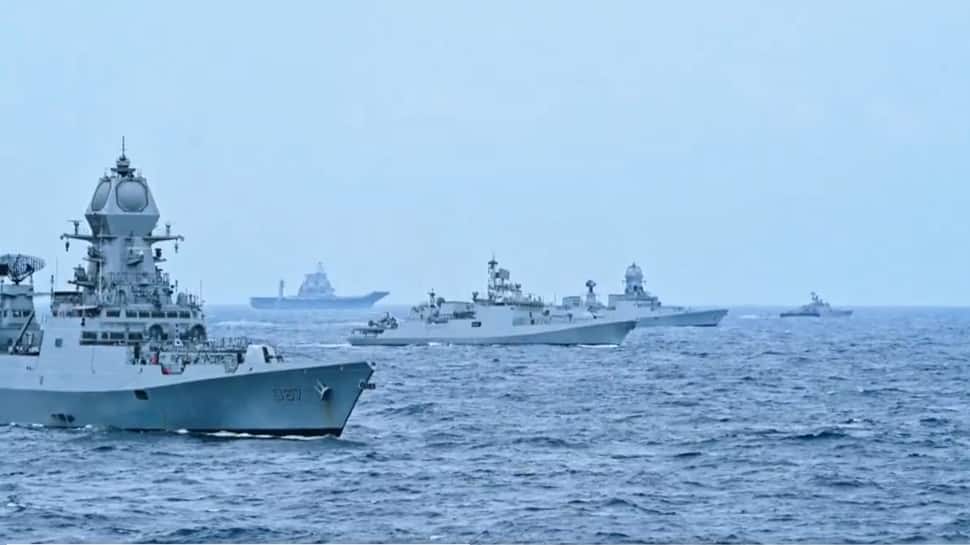
China operates the largest navy in the world by number of hulls and active sea-going ships, with 370 in service, as its navy is spread across the Pacific and beyond. The Chinese navy has been trying to cement its foot in the Indian Ocean region and its movement has been under scrutiny by the Indian Navy. Amid the rising Chinese influence, the Indian Navy, which has approximately 150 frontline warships, is now significantly boosting its capabilities to keep both China and Pakistan in check.
The Indian Navy is poised for a major leap in maritime strength in 2026, with plans to commission 19 warships in a single year. This marks the largest annual induction of vessels in its history. The unprecedented expansion underscores India’s accelerating naval modernisation and its focus on strengthening dominance across the Indian Ocean Region and the wider Indo-Pacific.
The incoming fleet will include a mix of frontline combatants, specialised support platforms and surveillance vessels, significantly enhancing the Navy’s operational reach, combat readiness and self-reliance. Reports describe 2026 as a “peak accretion year”, reflecting the maturity of India’s indigenous shipbuilding ecosystem.
Among the most significant additions are Nilgiri-class stealth frigates under Project 17A, designed for multi-role operations including anti-submarine, anti-air and surface warfare. These next-generation frigates feature advanced sensors, modern weapons suites and improved stealth characteristics, enabling them to operate effectively in high-threat environments.
The Navy will also induct Nistar-class Diving Support Vessels (DSVs), which are critical for deep-sea diving operations and submarine rescue missions. These vessels will enhance India’s ability to respond to underwater emergencies and support complex subsea operations, an increasingly important capability as submarine deployments grow.
Further strengthening maritime surveillance and safety, Ikshak-class hydrographic survey ships are expected to join the fleet. These platforms will support detailed seabed mapping, navigational charting and maritime domain awareness, key enablers for both military operations and civilian navigation.
What sets this expansion apart is the scale and speed of delivery. Indian shipyards are on track to deliver nearly one warship every six weeks in 2026, reflecting a sharp rise in domestic shipbuilding capacity and efficiency. Most of the vessels are being constructed under the government’s “Make in India” initiative, reducing dependence on foreign suppliers while boosting local industry.
Strategically, the massive induction comes amid rising maritime competition and growing security challenges in the region. A stronger fleet will allow the Indian Navy to maintain a sustained presence across critical sea lanes, protect national interests, and respond swiftly to emerging threats.
About the Author