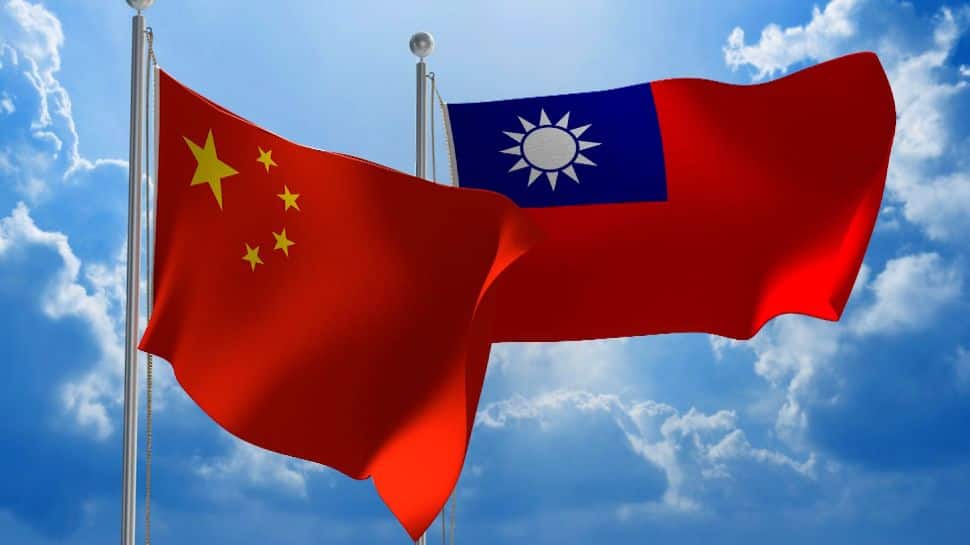
China Taiwan Tensions: The United States’ military strikes on Venezuela and the detention of President Nicolás Maduro have triggered a global debate on sovereignty and international norms. The episode is being closely watched far beyond Latin America, with analysts and media across Asia examining what this precedent could mean for flashpoints such as Taiwan and Ukraine.
At the centre of the discussion lies a question: could the action taken against the Venezuelan leader encourage major powers to attempt similar operations inside what they describe as their own spheres of influence? Some observers argue that Washington’s move may embolden countries like China or Russia to act more aggressively in long-standing territorial disputes.
Another view circulating among experts suggests that Maduro’s arrest could serve as a warning for Beijing. According to this assessment, the incident highlights the limits and challenges of China’s global reach, particularly in executing complex overseas operations.
Chinese state media has not indicated that the People’s Liberation Army (PLA) is planning any mission to detain Taiwan President William Lai Ching-te. Even so, Beijing has issued repeated threats over the years regarding the use of force against Taipei.
Reports have also surfaced claiming that China has constructed replicas of Taiwan’s Presidential Office and important government buildings at its Zhurihe military base. These replicas are believed to be used to rehearse potential “decapitation strike” operations aimed at targeting top leadership.
Zhang Chi, a professor at China’s National Defense University, told the state-run Global Times that “decapitation strike” scenarios were rehearsed during the “Justice Mission 2025” military drills conducted near Taiwan toward the end of last year.
He said the exercises included “simulated attacks on major symbolic targets linked to important faces of Taiwan’s pro-independence separatist forces”.
Zhang also claimed that the PLA possesses “strong capabilities to carry out precise actions against the principal culprits of Taiwan independence if required”.
Mood Inside Taiwan
These signals from Beijing are being taken seriously in Taiwan, especially in light of how swiftly the United States managed to detain Maduro.
Taiwanese media outlets, including the Storm Media and the United Daily News, have featured concerns that “Taiwan could become the next Venezuela”. Commentaries suggest that America’s use of blockade tactics and leadership-targeting strategies may push China to consider similar steps against Taiwan.
Another Taiwanese digital news outlet, Tai Sounds, reported that a social media account linked to China’s state news agency Xinhua published a WeChat article on January 3, urging readers not to compare US actions in Venezuela with Taiwan.
The article described China as a peace-loving nation that turns to war only when no other option left. It also stated that China, unlike the United States, fights in the name of justice.
Questions Over China’s Capabilities
Taiwanese media has also focussed on whether China possesses the operational capacity to execute an operation similar to that carried out by the United States.
Citing Su Tzu-yun of the Institute for National Defense and Security Research, a report in the China-leaning China Times said Beijing has long attempted to infiltrate Taipei’s military police and presidential security units to gather intelligence on the president’s movements. Su warned that Taiwan must be vigilant against such efforts.
He also said that the US operation in Venezuela demonstrated electronic warfare capabilities that surpass those of China. According to him, American-made radar and communication systems deployed in Taiwan cannot be disabled as easily as Chinese systems.
In another article published by the United Daily News, Cheng Chi-wen, editor-in-chief of the Asia Pacific Defense magazine, said Taiwan’s situation is different from Venezuela’s. He pointed out that Beijing’s level of political and military infiltration in Taiwan is far lower than the degree of the US penetration historically seen in Latin America.
He added that “anti-decapitation” or the protection of top leadership has always been a core focus of Taiwan’s military. He said Taipei’s special forces have engaged in extensive exchanges with the US military in recent years.
Another United Daily News report quoted former US defense official Drew Thompson as saying that the PLA has far less experience in such operations compared to the American military. He also said, “China has other options to neutralise Taiwan’s leader, and if it chooses assassination, the chances of success could be higher.”
Taiwan’s Official Response
Taiwan’s Deputy Defense Minister Hsu Shih-chien said on January 5 that the armed forces are “prepared for all kinds of emergencies”.
According to the Liberty Times, when asked about concerns over a potential Chinese “decapitation operation”, Hsu said the military has plans for every scenario and has conducted drills accordingly. These preparations include the Wan Chun Plan, which focusses on presidential security.
In another report, Taiwan’s state-run Central News Agency quoted Hsu as telling members of the Legislative Yuan’s finance committee on January 5 that strengthening emergency preparedness is essential. He urged lawmakers to pass both the annual and special defense budgets at the earliest possible opportunity.
About the Author