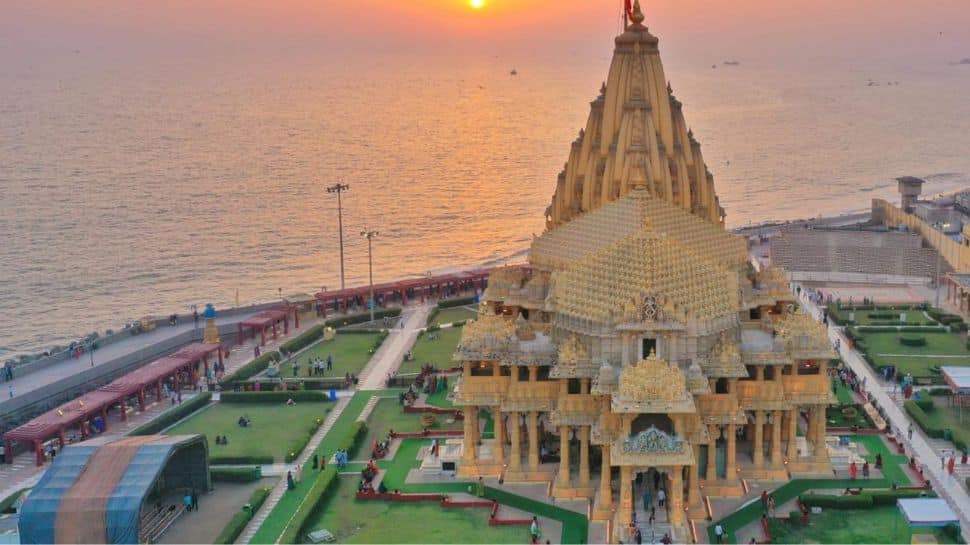
Gandhinagar: The history of the Somnath Temple, a cornerstone of Indian culture and spirituality, is an extraordinary tale of strong faith and relentless reconstruction. Somnath, the first among the twelve Jyotirlingas, this sacred shrine has stood for centuries as a guardian of India’s cultural and spiritual identity.
Historical Context And Struggle
The grandeur and prosperity of the Somnath Temple made it a prime target for invaders in ancient times. In 1025-26 CE, Sultan Mahmud of Ghazni from the Ghazni province of Afghanistan launched his most destructive attack on Somnath. At that time, Somnath was an exceptionally prosperous religious centre, which Mahmud reached by traversing difficult terrains to steal. Local rulers and the populace resisted valiantly, yet Ghazni inflicted severe damage on the temple and plundered its wealth. Despite this devastation, he failed to extinguish the spirit of faith. Immediately after his departure, the Chaulukya (Solanki) rulers rebuilt the temple, preserving and revitalising the culture.
Restoration Of Independence And National Pride
After India gained independence, the reconstruction of the Somnath Temple became a matter of national pride. The Iron Man, Sardar Vallabhbhai Patel, resolved in 1947 to restore the temple to its original glory. Under his guidance, the renowned sculptor Prabhashankar Sompura built the magnificent temple in the traditional Chaulukya style. In 1951, when the temple was inaugurated by India’s first President, Dr Rajendra Prasad, he declared it a symbol of the nation’s cultural renaissance.
PM Narendra Modi’s Vision And New Horizons Of Modern Development
After Prime Minister Narendra Modi assumed the role of Chairman of the Shri Somnath Trust, a new chapter of modern development began for Somnath. Under his visionary planning, the temple complex has been transformed into a world-class tourist destination. Devotees now benefit from digital darshan, enhanced security, and state-of-the-art facilities.
Promenade (Walkway): The scenic pedestrian path along the seashore has emerged as a major attraction for visitors.
Technology: Efforts have been made to bring history to life through the grand ‘Light and Sound Show.’
Protection: Specialised technical measures have been implemented to safeguard the temple from marine salinity and thorny vegetation.
Today, the Somnath Temple stands as a remarkable blend of traditional values and modern development, serving as a living symbol of faith and national pride for devotees worldwide.
About the Author