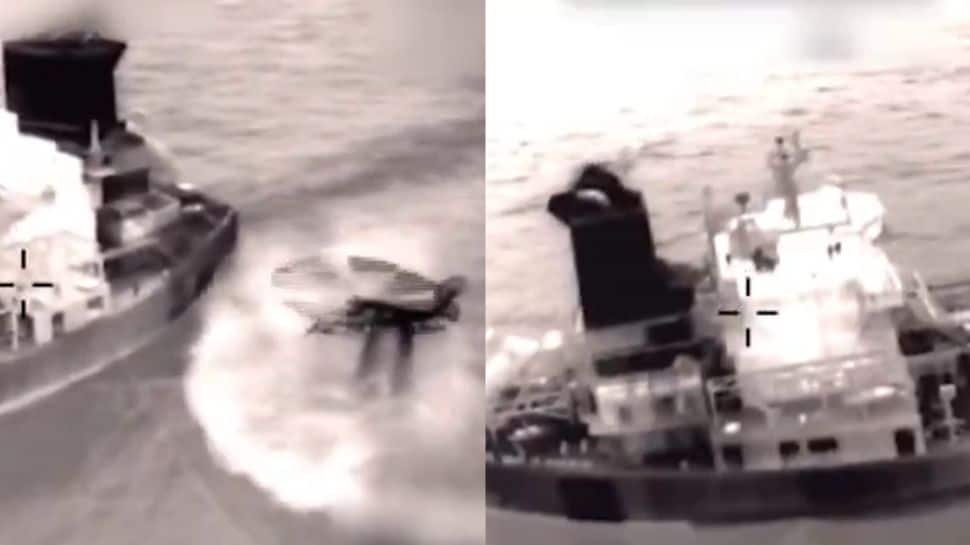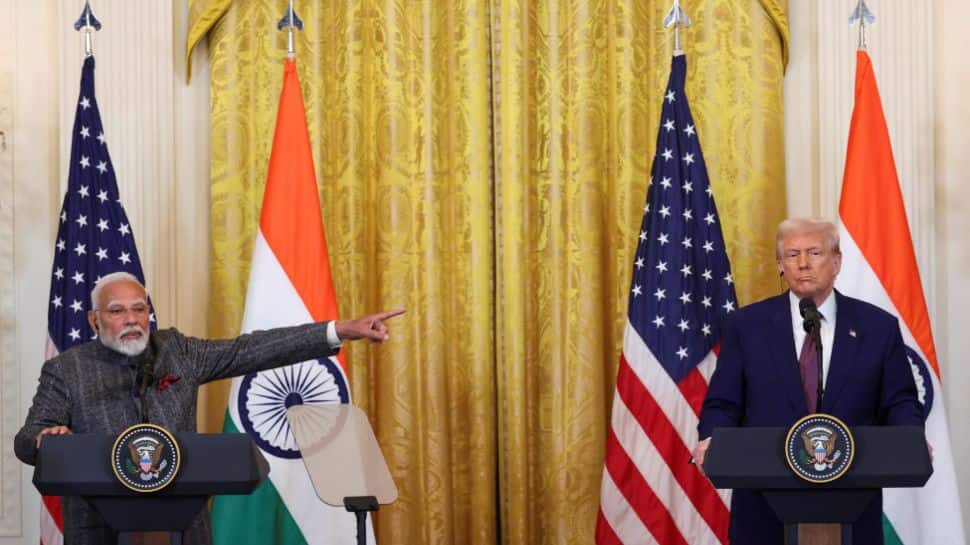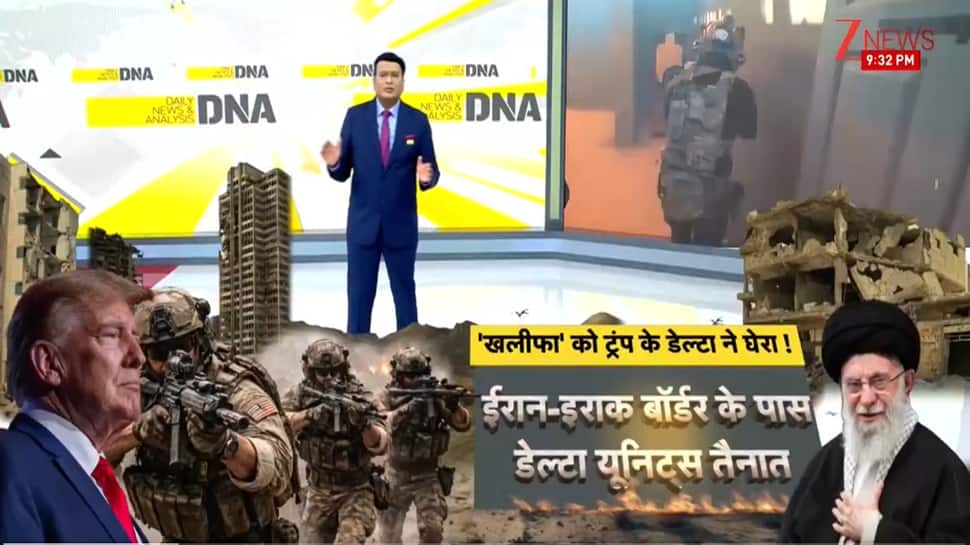
US President Donald Trump has been issuing threats to several smaller nations after Venezuela and has openly challenged Russian President Vladimir Putin by seizing a Russian tanker. However, intelligence sources now suggest that Iran may be his next major target. Strong indicators have emerged pointing towards a major covert operation in the region.
The same US Delta Force commandos who were earlier tasked with a mission to extract Venezuelan President Nicolás Maduro have now reportedly moved close to Tehran. Their deployment in the Middle East on Trump’s direct orders has triggered serious concern within Iranian security circles. In today’s DNA, Rahul Sinha, Managing Editor, of Zee News, analysed the Iran-US tensions and Israel’s role:
Watch Full DNA Episode Here:
Analysis of Trump’s most ‘dangerous times’
‘ED Vs Didi’ in Bengal…war broke out on the streets
When will the habit of ‘freebies’ be stopped in the country?see #DNA LIVE with Rahul Sinha#DNAFriends #ZeeLive #ZeeNews #DNAWithRahulSinha @RahulSinhaTV
https://t.co/3gkGpcObPi — Zee News (@ZeeNews) January 8, 2026
#DNAFriends Caliph’s ‘war force’ target set! Maduro’s kidnapper ‘Delta Force’…why on Iran border? #DNA #DNAWithRahulSinha #DonaldTrump #UnitedStates #Iran @RahulSinhaTV pic.twitter.com/Fh4rKbNpHo— Zee News (@ZeeNews) January 8, 2026
Delta Force Deployed Near Iraq-Iran Border
According to defence sources:
* Selected units of US Delta Force have been deployed near the Iraq–Iran border on direct orders from Trump.
* The commandos are stationed at temporary American military bases in Iraq’s Diyala and Wasit provinces.
* These locations are approximately 450 kilometres from Tehran.
* The elite commandos are on forward alert status, meaning they are ready to launch operations at any time.
* Deployment of Delta Force is never routine — they are assigned only for high-risk, high-value missions.
Given Delta Force’s reputation for targeting high-value targets, their presence near the Iran border is being linked to potential action against Supreme Leader Ayatollah Ali Khamenei.
Iran Surrounded as Protests Turn Violent
Earlier, reports highlighted the largest US military buildup around Iran since the Iraq invasion. This comes at a time when anti-government protests in Iran have intensified, leaving over 35 dead and more than 1,200 arrested. Despite crackdowns, unrest continues to spread.
With Delta Force now positioned near its borders, Tehran views the situation as extremely dangerous. The coming days are being described by analysts as critical for Middle East stability.
Iran Issues Pre-Emptive Strike Warning
Iran has now issued a pre-emptive strike warning against the US and its allies. Iranian Army Chief Major General Amir Hatami warned, “The rhetoric against Iran will no longer be answered with words. From now on, it will be met with military action.”
Why Iran Is Threatening Retaliation
Tehran accuses the US and Israel of openly supporting anti-government protests and conducting military deployments around its borders. This has heightened Iranian fears of regime change.
Russian intelligence sources claim that Iran’s first strike could target Israel rather than US bases. Following these reports, Russia is reportedly considering evacuating its embassy in Israel after receiving intelligence of a possible attack.
Iran’s Missile Capability
Iran’s retaliatory capability remains significant:
* Iran possesses around 3,000 ballistic missiles.
* It is developing the ability to launch 2,000 missiles simultaneously in a saturation strike.
* Missiles like Fateh-1 and Fateh-2 have ranges between 1,400 and 1,800 kilometres.
* Iran claims these missiles travel at 15 times the speed of sound, making them hypersonic and nearly impossible to intercept.
* Tehran has also developed medium-range missiles capable of carrying nuclear warheads, raising alarm over future nuclear weaponisation.
Why Iran May Strike First
Despite knowing the military strength of the US and Israel, Iran may still opt for a first strike:
* A pre-emptive attack would allow Iran to portray itself as acting in self-defence.
* It could divert public attention from ongoing protests by creating a national security crisis narrative.
* Such a move could strengthen Khamenei’s grip on power, making regime change efforts harder for Washington.
High-Stakes Power Struggle
Sources claim that Trump is preparing for a regime change operation against Khamenei, while Iran’s Islamic government is trying to reassert its relevance and authority at home.
The situation signals extreme volatility in the Middle East, with the potential for direct confrontation between Iran, the US, and Israel in the coming days.
About the Author