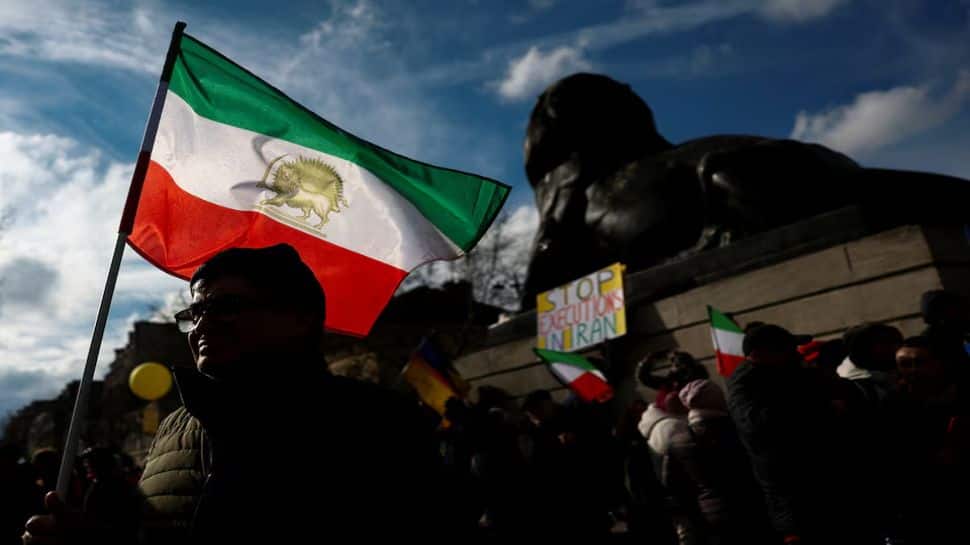
New Delhi: Fresh protests across Iran over the past week have added to the strain on a struggling state already buckling under a deepening economic breakdown. Street anger, triggered by a collapsing currency, has pushed a fragile system closer to the edge.
At the same time, events far from Iran’s borders have landed with force in Tehran. Over the weekend, images circulated of US forces storming Caracas in a nighttime operation and taking Venezuela’s President Nicolás Maduro into custody. He and his wife were pulled from their residence and flown to the United States. It rattled Iran’s leadership. Maduro has long been viewed in Tehran as a close ally. The operation sent the country a signal.
Within days, Washington toughened its tone toward Iran. A warning followed earlier threats, making clear that deadly force against protesters would invite a direct American response. The message arrived as Iran was still absorbing last summer’s strikes on its nuclear facilities and adjusting to an increasingly aggressive posture from Washington.
The warning left little room for interpretation, with US leadership signalling that a violent crackdown would be met with severe consequences.
Protests inside Iran began with shopkeepers voicing anger over the freefalling rial. The demonstrations were initially limited in scope and largely peaceful. But it soon spread nationwide as wider sections of the society joined in. According to the US-based Human Rights Activists News Agency, unrest was recorded in 88 cities across 27 provinces. Security forces later deployed the Basij paramilitary units to restore control.
After 10 days, the same agency reported that at least 34 protesters had been killed and more than 2,000 arrested. Raids extended to hospitals, including one in Ilam where wounded demonstrators were taken into custody. Two members of the security forces also lost their lives during the unrest. These numbers could not be independently verified.
The strong language from Washington has enraged Iran’s leadership and hardened its response on the ground. For years, Iranian authorities have warned that foreign powers are working toward regime change. The claim repeated with fresh urgency. Support for protesters voiced by Israel’s prime minister has deepened suspicion within Tehran. Officials have labelled segments of the demonstrations as foreign-backed disturbances, describing some participants as rioters and hired agents.
Iran’s Supreme Leader Ayatollah Ali Khamenei echoed this line in a public message, stating that peaceful protest was acceptable while violent disorder was not. He asserted that those engaged in unrest should face firm action.
Security concerns are raw after last summer’s war with Israel, when it emerged that Tel Aviv’s intelligence had smuggled weapons into Iran and carried out strikes from within the country. In the aftermath, dozens were arrested and at least 10 people were executed. This week, state media reported the arrest of a man in Tehran accused of cooperating with Israel’s Mossad.
Within Iran’s strategic circles, US intentions are now widely viewed as openly hostile and expansive in scope. Analysts say that the operation in Venezuela has intensified fears that Washington is prepared to pursue similar actions elsewhere, even as the situation in Caracas continues to develop and unfold with new developments emerging.
Iran now finds itself dealing with multiple pressures at once. Economic stress and political unrest have been joined by growing external threats from the United States and Israel, raising the specter of another military confrontation.
The comparison with Venezuela has become unavoidable. Under Hugo Chávez and later Nicolás Maduro, Caracas built one of Iran’s closest partnerships in the Western Hemisphere. Sanctions, energy cooperation and military ties bound the two countries tightly together.
As Venezuela’s economy collapsed under US pressure, Iran stepped in with oil shipments carried by Iranian-flagged tankers. Dozens of agreements followed, including a 20-year cooperation plan covering refinery repairs and expanded defense ties. Plans were even drawn up for Iran’s Revolutionary Guard to help build a metro line in Caracas before the project was abandoned.
The visible similarities between the two governments have fuelled speculation about whether Iran’s leadership could one day face a comparable outcome. Both countries possess vast oil reserves and mineral wealth. Both have defined themselves through opposition to American power. Years of sanctions have battered their economies. Direct threats from Washington have raised the stakes for leaders in Tehran and Caracas.
Differences are clear. Iran’s system is built around a theocratic structure based in Shiite ideology. Venezuela’s leadership followed a secular socialist path. Iran has also spent decades preparing for outside pressure, building regional proxy networks and investing heavily in missiles and drone capabilities designed to deter external intervention. Senior officials have warned that any attack would put American assets across the region at risk.
Inside Iran, hostility toward foreign intervention is strong across political lines. Even during last summer’s Israeli strikes, rival factions closed ranks in public displays of national unity.
Observers caution that removing a leader does not automatically transform a system. The developing events in Venezuela are being closely watched as a test of whether toppling a person at the centre leads to meaningful change in state policy.
For Iran’s leadership, recent events reinforce a long-held belief that dialogue with Washington masks hidden intentions. Leaders have said that past talks with the United States were really a cover for military plans. They insist that resisting is the only choice and giving in is not an option.
About the Author