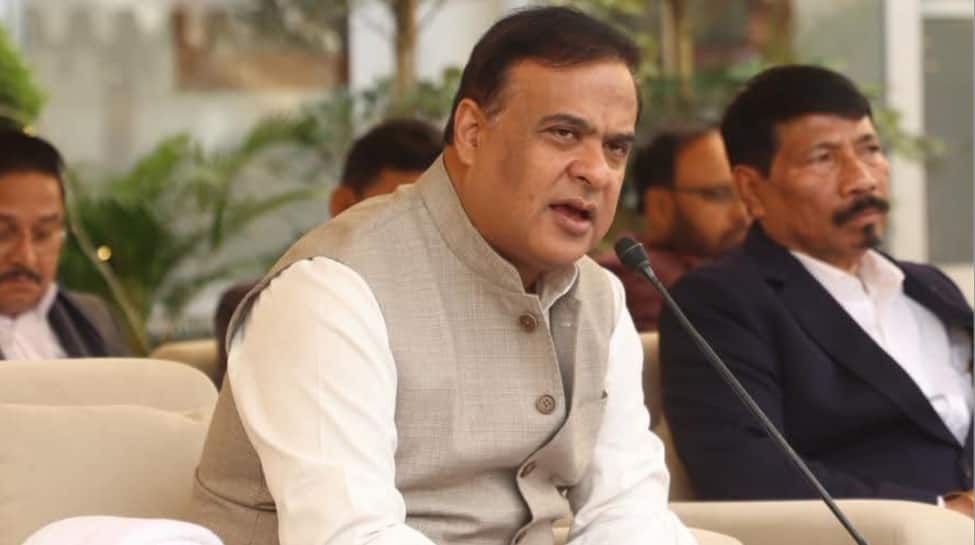
Assam Chief Minister Dr Himanta Biswa Sarma extended New Year greetings to the people of the state and outlined the government’s achievements, ongoing welfare initiatives, and future policy priorities during a series of press interactions in Guwahati. He highlighted Assam’s economic growth, social welfare measures, law and order improvements, and major infrastructure projects, emphasising the state’s progress and development over the past five years.
Addressing key announcements for 2026, Dr Sarma detailed new schemes, policy directions, and administrative reforms aimed at improving the lives of citizens. He also spoke about Assam’s increasing presence on the global stage, including participation in the World Economic Forum at Davos, signalling the state’s ambition to attract investment and accelerate development.
Economic Growth and Fiscal Performance
Dr Sarma stated that Assam has become India’s fastest-growing state economy, recording a 45% growth in Gross State Domestic Product (GSDP) between 2020 and 2025, well above the national average of 29%. The Reserve Bank of India has recognised the state for this achievement. Per capita income has risen from ₹1,03,371 in 2021 to ₹1,59,185, an increase of 54%, while state revenue collection has grown by 53% over the past five years. Assam is set to participate for the first time at the World Economic Forum in Davos, alongside Maharashtra and Andhra Pradesh, to showcase its development and investment potential.
Key Announcements
The Chief Minister announced that around 37-38 lakh women beneficiaries under the Orunodoi scheme will receive an advance payment of ₹8,000 on 20 February 2026, including a special Bihu grant. The scheme will temporarily pause in March-April and resume in May. A new scheme, “Babu Asoni”, will provide monthly financial assistance to male students pursuing higher education, offering ₹2,000 per month for postgraduate students and ₹1,000 per month for undergraduates, subject to income eligibility, effective from February 2026.
Dibrugarh is slated to become Assam’s second capital within the next three years to decentralise administration, and the state will become the first in India to constitute the 8th State Pay Commission, advancing employee welfare.
Employment, Welfare, and Social Security
The Chief Minister reported that 1.46 lakh government jobs have been provided, with the target of two lakh jobs in sight. Nearly one lakh youths have received self-employment loans without mortgage requirements. Other welfare coverage includes 32 lakh women under Mahila Udyamita, 70 lakh beneficiaries receiving food security items, 3.9 lakh students granted free college admission, 3 lakh people receiving land rights under Mission Basundhara, and 26 lakh families accessing cashless medical treatment.
Law and Order and Security
Assam has emerged as a national leader in implementing three new criminal laws. Registered criminal cases have decreased from 1.33 lakh in 2021 to 43,748, with charge-sheeting rates increasing to 81-91% and conviction rates improving to 26.38%, approaching the national average. Narcotics worth ₹2,900-₹3,000 crore have been seized over the last five years. The government has also pushed back nearly 2,000 foreign nationals and will deport persons declared foreigners within one week of identification by Foreigners’ Tribunals.
Infrastructure and Connectivity
Major infrastructure projects include four new bridges over the Brahmaputra at Jorhat-Majuli, Palashbari-Sualkuchi, Guwahati-North Guwahati, and Dhubri-Phulbari, with the Guwahati-North Guwahati bridge opening in February 2026 and others by 2027. The Guwahati Ring Road and Narengi-Kuruwa bridge projects have commenced, and the Prime Minister is set to lay the foundation stone for a 34.45 km elevated corridor in Guwahati, costing ₹6,957 crore. A ₹20,000 crore twin-tube underwater tunnel with railway connectivity between Gohpur and Numaligarh has been proposed, awaiting Union Cabinet approval.
About the Author