New Delhi: Pakistan’s unease over India’s water strategy is intensifying. Following the suspension of the Indus Waters Treaty (IWT), news of a fresh Indian hydropower initiative on the Chenab River has further heightened Islamabad’s concerns. Officials in Pakistan now fear that India’s new move will escalate the challenge they face.
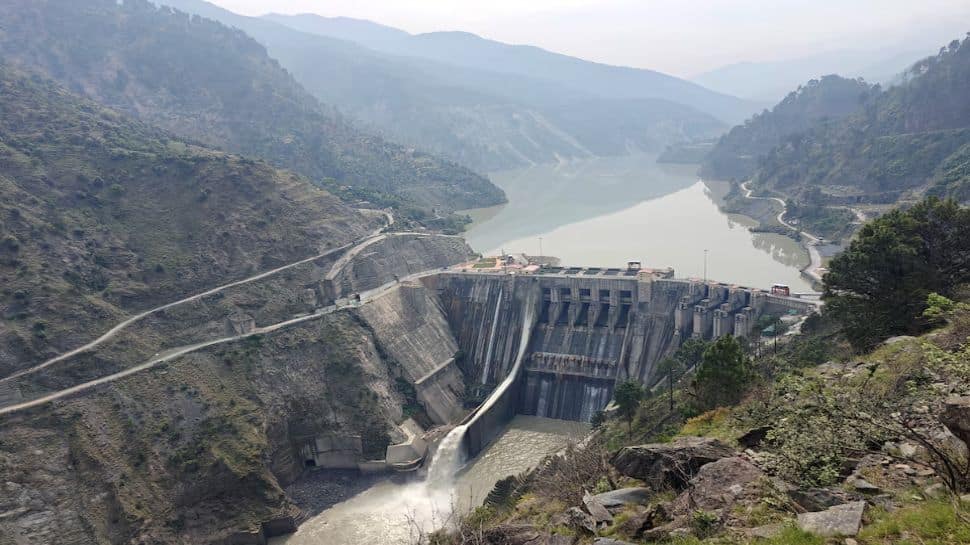
The Indian government has cleared the path for a strategically important water project in Jammu and Kashmir. A panel under the Ministry of Environment recently approved the 260-megawatt Dulhasti Stage-II hydropower project in Kishtwar. This comes two months after approval was granted for the 1,856-megawatt Sawalkot hydropower project in Ramban district on the same river.
Analysts say these approvals are likely to add to Pakistan’s growing unease.
During Operation Sindoor, the suspension of the IWT already sent a strong signal to Pakistan. Now, with the Dulhasti Stage-II project, India has reinforced that it will not compromise on its water resource interests.
These two projects together will maximise the utility of the Chenab River, one of the major western rivers, including the Sindh and Jhelum, whose waters have largely flowed unused into Pakistan.
Until now, India has harnessed only a fraction of the estimated 20,000 megawatts potential from hydropower on the western rivers in Jammu and Kashmir. Existing facilities, including the 390-megawatt Dulhasti Stage-I, which has been successfully operating since 2007, account for just 3,482 megawatts.
With an estimated cost of Rs 3,200 crore, Dulhasti Stage-II will expand Stage-I capacity. The project plans to divert water from Stage-I through a separate tunnel to enhance power generation.
News of the Chenab hydropower project quickly reached Pakistan, triggering strong reactions in Islamabad. Initially, Islamabad responded with warnings and diplomatic appeals, but these efforts have so far yielded little impact.
Domestic debates are also taking place within Pakistan regarding the implications of India’s decision. Senator Sherry Rehman said, “Using water as a weapon is neither wise nor acceptable.”
With these approvals, India has signalled that it intends to fully leverage its water resources, highlighting its strategic priorities in Jammu and Kashmir.
Combined with previous measures like the IWT suspension, this step, say analysts, sends a message to Pakistan that India is determined to protect its interests and fully utilise the rivers within its control.
About the Author