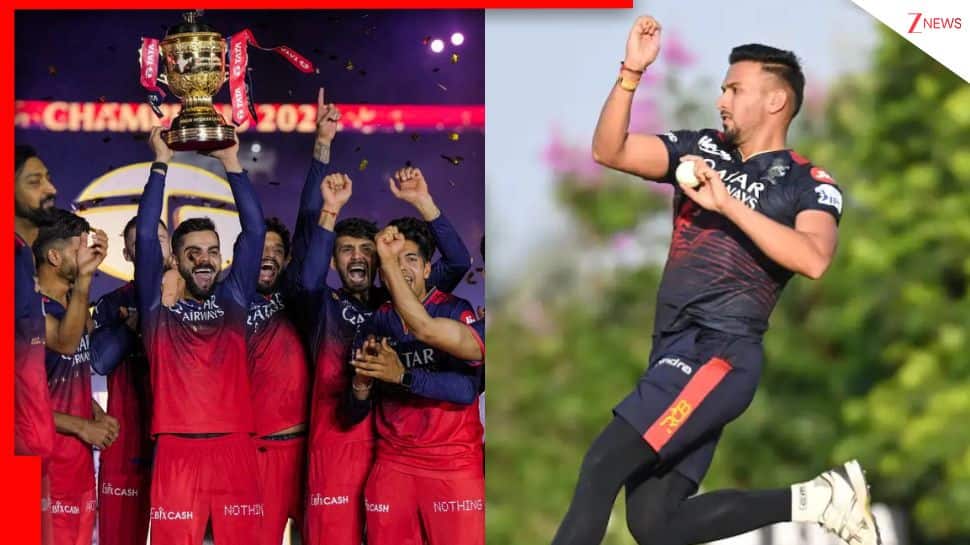
Indian domestic cricket has been jolted by a doping controversy after former Royal Challengers Bengaluru pacer Rajan Kumar tested positive for multiple banned substances. The 29-year-old left-arm pacer has been provisionally suspended by the National Anti-Doping Agency, a development that matters because such cases remain rare in Indian cricket and often derail promising careers.
What Triggered the NADA Action
According to PTI reports, Rajan Kumar’s dope sample returned adverse findings for three prohibited substances: Drostanolone and Metenolone, both anabolic steroids linked to muscle growth and recovery, and Clomifene, a drug misused by male athletes to regulate testosterone levels. Following standard anti-doping protocol, NADA imposed an immediate provisional suspension once the results were confirmed.
Kumar last featured for Uttarakhand in the Syed Mushtaq Ali Trophy 2025, playing against Delhi in Ahmedabad on December 8. He is yet to issue an official statement, and it remains unclear whether he will request a B sample test or formally challenge the findings.
From RCB Prospect to Career Crossroads
Rajan Kumar was bought by Royal Challengers Bengaluru for Rs 70 lakh at the IPL 2023 auction and retained in the 2024 squad, though he never made his IPL debut. His domestic form, however, had been on a clear upward curve.
The Haridwar-born pacer finished as Uttarakhand’s leading wicket-taker in the 2025 Syed Mushtaq Ali Trophy, claiming 13 wickets in seven matches at a strike rate of 8.34. His overall domestic numbers underlined his growing value.
In T20s, Kumar has taken 32 wickets in 26 matches at an average of 21.31. He has also picked up 14 wickets in nine List A games, including a five-wicket haul, and eight wickets across four First-Class matches. For a left-arm pacer pushing for higher recognition, the suspension represents a severe career setback.
Why Doping Cases Shock Indian Cricket
Doping violations are uncommon in Indian cricket, which makes this case particularly significant. The last high-profile incident involved Prithvi Shaw in 2019, when the India batter received an eight-month ban after testing positive for Terbutaline. Madhya Pradesh all-rounder Anshula Rao was suspended in 2020 following a failed dope test.
Each case has reinforced how even inadvertent or poorly explained violations can carry heavy consequences under NADA and World Anti-Doping Agency regulations. The Rajan Kumar doping case again highlights the fine margins athletes operate within.
Broader Context and Expert View
India’s broader struggle with doping control adds another layer of concern. The country has topped the World Anti-Doping Agency’s list for the highest number of adverse analytical findings in recent years across sports. With India set to host the 2030 Commonwealth Games in Ahmedabad and bidding for the 2036 Olympics, scrutiny on anti-doping compliance has intensified.
Experts believe domestic athletes remain vulnerable due to limited awareness, supplement misuse, and inadequate medical guidance. For cricketers, where testing frequency is lower than Olympic sports, any violation draws sharper attention and reputational damage.
What Lies Ahead for Rajan Kumar
Kumar’s immediate future hinges on whether he opts for B sample testing and how NADA’s disciplinary process unfolds. Until then, his provisional suspension stands, halting all competitive participation.
For Indian cricket, the episode serves as a reminder that integrity safeguards apply equally across formats and levels. For Rajan Kumar, it marks a defining moment that could either end a rising career or become a cautionary chapter, depending on what follows.
About the Author