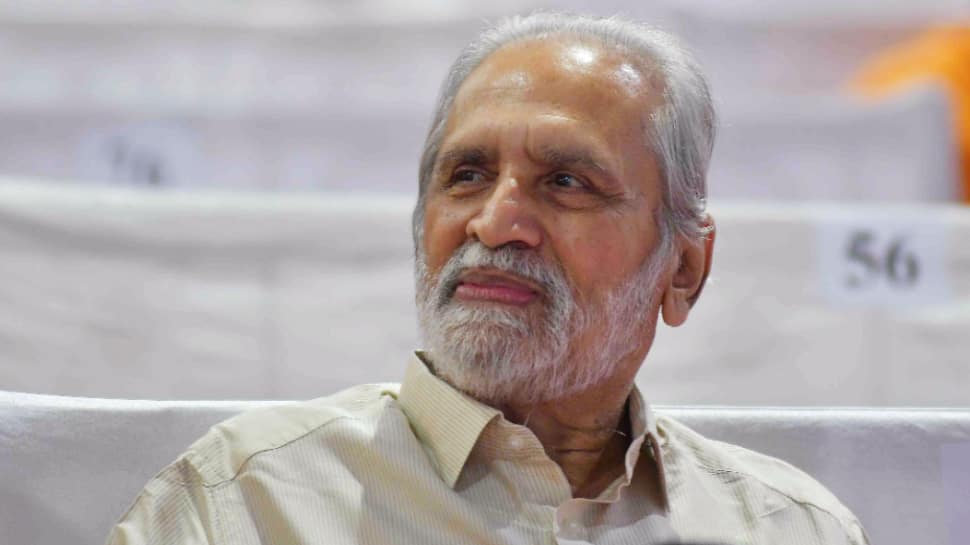
Suresh Kalmadi, the former Indian Air Force pilot turned politician and sports administrator, passed away on January 6, 2026, at the age of 81 in Pune after a prolonged illness.
Kalmadi, the former union minister is survived by his wife, son and daughter-in-law, two married daughters and a son-in-law, as well as grandchildren.
His death marks the final chapter of a career that was as influential as it was infamous – a journey that saw a former fighter pilot rise to become the “Czar” of Indian sports, only to be brought down by one of the most publicized corruption scandals in the nation’s history.
The Rise: From Cockpits to Corridors of Power
Before he became a politician, Kalmadi served as a pilot in the Indian Air Force, flying combat missions during the 1965 and 1971 wars. This background gave him a reputation for discipline and administrative grit, which he transitioned into a political career in the late 1970s.
A protege of Sharad Pawar, Kalmadi became the face of the Congress party in Pune, eventually serving multiple terms in both the Rajya Sabha and Lok Sabha. His administrative prowess was undeniable; he turned Pune into a hub for sports and culture, founding the Pune International Marathon and the Pune Festival.
The Sports Administrator
Kalmadi’s true kingdom, however, was the Indian Olympic Association (IOA), which he led as President from 1996 to 2011.
During his tenure, he successfully bid for the 2010 Commonwealth Games (CWG), promising to showcase India as a global sporting power. He brought world-class infrastructure to India, including the Balewadi Sports Complex.
Kalmadi was also instrumental in reviving the National Games, ensuring they were held regularly across different states.
The 2010 Commonwealth Games Scandal
The 2010 Games were meant to be Suresh Kalmadi’s crowning achievement. Instead, they became his undoing. While the event was a sporting success for India (winning 101 medals), the lead-up was marred by reports of collapsing footbridges, unhygienic athlete villages, and massive financial discrepancies.
The Anatomy of the Scam
The Central Bureau of Investigation (CBI) alleged that Suresh Kalmadi, as Chairman of the Organizing Committee, presided over a system of systemic over-invoicing and fraudulent contracts.
Key allegations against Kalmadi included:
The TSR System: Awarding a contract for the “Timing, Scoring, and Results” system to a Swiss firm at an inflated price of Rs 141 crore, allegedly causing a loss of over ₹90 crore to the exchequer.
Inflated Costs: Reports surfaced of the committee renting basic items at exorbitant rates – such as treadmills for Rs 9 lakh and air conditioners for ₹4 lakh.
Nepotism: Allegations that contracts were funneled to firms with links to his family and associates.
In April 2011, Kalmadi was arrested and spent 10 months in Tihar Jail. The images of the once-powerful administrator in handcuffs became the defining visual of the anti-corruption wave that swept India in the early 2010s.
Legacy: A Tale of Two Halves
Kalmadi’s later years were spent in relative obscurity. Though he was eventually cleared of money laundering charges by a Delhi court in April 2025 (due to a lack of evidence regarding “proceeds of crime”), the “CWG Scam” label remained inseparable from his name.
Suresh Kalmadi leaves behind a complicated legacy. To some, he was the man who dared to bring the world’s biggest stages to India; to many others, he was the man who allowed greed to overshadow the spirit of the Games.
About the Author