On December 25, India commemorates the birth anniversary of Bharat Ratna Atal Bihari Vajpayee, a leader remembered not only for his political acumen but also for his empathy, poetry, and belief in dialogue. Among his many enduring legacies, one stands out vividly for sports lovers across the subcontinent: his visionary role in reviving India-Pakistan cricket after a 15-year hiatus, using sport as a bridge when diplomacy stood fractured. At a time when mistrust defined bilateral relations, Vajpayee believed that neighbours could not be changed, but relationships could be reshaped through goodwill and courage.
The Lahore Bus Yatra and a bold message of peace
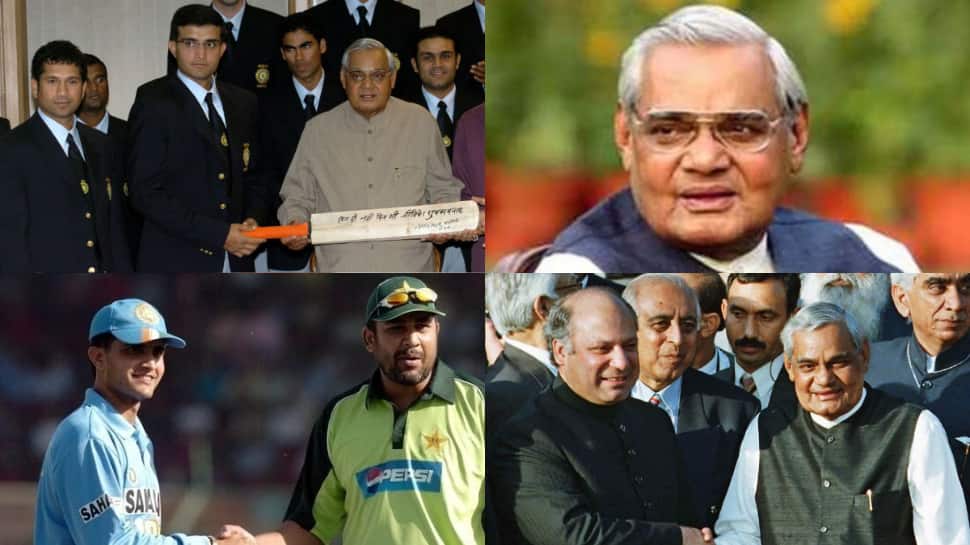
Vajpayee’s philosophy found expression in February 1999, when he undertook the historic Lahore Bus Yatra to meet Pakistani Prime Minister Nawaz Sharif. Crossing the border amid global attention, Vajpayee declared, “Hum jung na hone denge,” signalling hope and reconciliation in an era dominated by suspicion.
Though the Kargil conflict later that year derailed the peace process and further froze cricketing ties, Vajpayee’s belief in engagement and dialogue never wavered. He continued to view people-to-people contact as essential to lasting peace.
ALSO READ – Fan Subtly Troll Rohit Sharma Asking ‘Vada Pav Khaoge’ During Vijay Hazare Trophy Game, His Reaction Wins Internet – WATCH
Ending a 15-year cricketing silence
The defining moment arrived in 2004, when Vajpayee approved India’s full tour of Pakistan, the first since 1989. The decision came despite security concerns and political criticism, reflecting remarkable political courage.
Before the team’s departure, Vajpayee hosted the Indian squad and presented captain Sourav Ganguly with a bat inscribed with a now-legendary message: “Khel hi nahi, dil bhi jeetiye.” His words carried a deeper instruction. Win matches if possible, but ensure that the tour leaves behind goodwill and warmth.
A tour that became history, not just a series
What followed remains one of the most memorable chapters in India-Pakistan cricket history. India dominated on the field, winning the ODI series 3-2 and achieving a historic first by clinching the Test series 2-1 on Pakistani soil.
Iconic performances defined the tour. Rahul Dravid’s epic innings showcased grit and class, while Inzamam-ul-Haq’s leadership inspired Pakistani resistance. Every match was charged with emotion, watched by millions across borders who had waited years for this rivalry to return.
Winning hearts beyond the scoreboard
Yet, the true success of the tour lay beyond runs and wickets. Pakistani fans showered Indian players with unprecedented love. There were standing ovations even in defeat, free meals offered by strangers, heartfelt gifts, and streets filled with warmth rather than hostility.
Thousands of Indian supporters crossed the border on special “cricket visas,” experiencing hospitality that defied decades of political tension. For many, it was their first direct interaction with people from across the border, fostering human connections long starved by politics.
Vajpayee’s foresight and the power of sport
Atal Bihari Vajpayee’s vision proved profound. He understood that while borders may divide nations, shared passions can unite people. By using cricket as a diplomatic tool, he demonstrated that sport could succeed where formal negotiations often failed.
In an era defined by rivalry, Vajpayee chose reconciliation. He believed that empathy and engagement could soften hardened perceptions and that peace required courage as much as strength.
A legacy that still resonates
Beyond cricket diplomacy, Vajpayee’s legacy endures as one of balance, dignity, and humanity. A poet at heart and a realist in governance, he brought grace to politics and compassion to leadership.
As India remembers Atal Ji on his birth anniversary, his message remains timeless. “Khel hi nahi, dil bhi jeetiye” is not merely advice for cricketers, but a philosophy for nations. In times of division, Vajpayee showed that bridges can be built, hearts can be won, and hope can outlast hostility.
About the Author