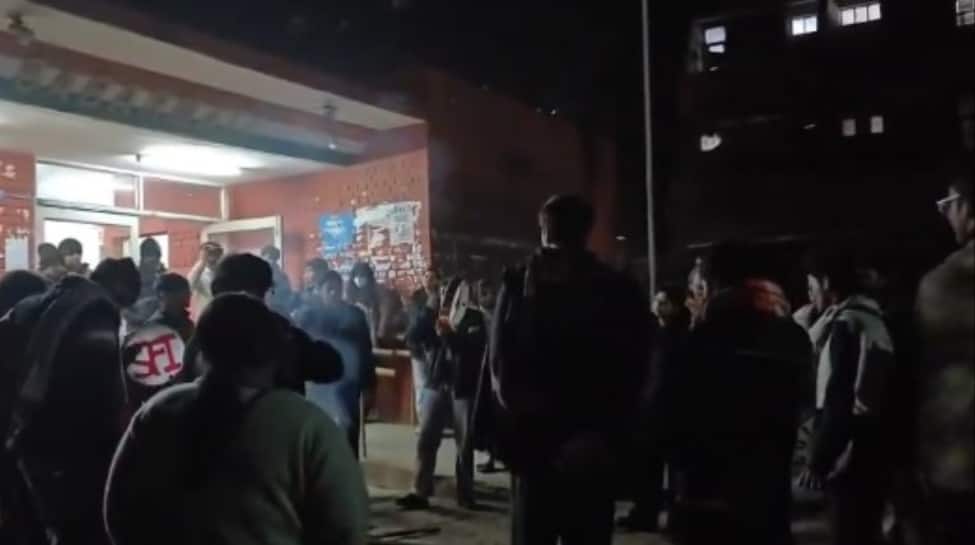
Jawaharlal Nehru University (JNU), historically known for its left-leaning activism and anti-establishment protests, is once again at the centre of a national controversy. The latest protests on campus, led by student groups associated with the Left, have escalated into allegations that what was once political dissent is now being framed as anti-national.
The controversy erupted on Monday when students reportedly raised slogans targeting Prime Minister Narendra Modi and Home Minister Amit Shah during a gathering at Guerilla Dhaba, a popular student venue on campus. The slogans followed the Supreme Court’s denial of bail to former JNU students Umar Khalid and Sharjeel Imam in connection with the 2020 Delhi riots case.
University Administration Takes Stern Action
In response, the JNU administration announced on Tuesday that strict disciplinary measures would be taken. In a series of posts on X, the university said that an FIR has been lodged and proceedings have begun against the students identified in the incident.
“The Jawaharlal Nehru University administration has vowed the strictest action against students found raising objectionable slogans against Hon’ble Prime Minister and Hon’ble Home Minister,” the statement said.
It added that students involved could face immediate suspension, expulsion, and permanent debarment.
The administration emphasised that universities are meant to be centres of innovation and critical thinking, not “laboratories of hate.” While acknowledging that freedom of speech is a fundamental right, it warned that “any form of violence, unlawful conduct or anti-national activity will not be tolerated under any circumstances.”
Security Report Flags Deliberate Slogans
A report submitted by the Chief Security Officer to the JNU Proctor concluded that the slogans were deliberate and intentional, rather than spontaneous expressions of protest. The report noted that such behaviour violates the JNU Code of Conduct and has the potential to disturb public order, campus harmony, and national security.
Authorities also said the university’s security branch is cooperating fully with the ongoing police investigation.
Students And Left Groups Involved
Around 30-40 students, affiliated with Left-leaning organisations such as the Students’ Federation of India (SFI), Democratic Students’ Federation (DSF) and All India Students’ Association (AISA), were present during the protest. Several students were specifically named in the security report, including Aditi Mishra, Gopika Babu, Sunil Yadav, Danish Ali, Saad Azmi, Mehboob Ilahi, Kanishk, Pakeeza Khan, and Shubham.
While the programme initially began peacefully, officials said the tone of the gathering changed significantly following the court verdict.
Multiple Campus Issues Fuel Tensions
The protest coincided with several ongoing disputes, including opposition to facial recognition systems and magnetic gates in the library, as well as events marking the sixth anniversary of the January 2020 attack on JNU students and teachers.
Officials say that the convergence of these issues, along with Left-led mobilisations, has contributed to a climate where anti-establishment dissent is increasingly being framed as anti-national activity.
The Broader Debate
Experts argue that Left-leaning student groups are deliberately transforming political dissent into acts perceived as hostile to the state. Supporters maintain that questioning government policies and judicial decisions is part of democratic debate, and conflating dissent with anti-nationalism undermines constitutional freedoms.
As disciplinary proceedings move forward and investigations continue, JNU remains at the centre of a heated national discussion over where legitimate protest ends and anti-national conduct begins.
About the Author