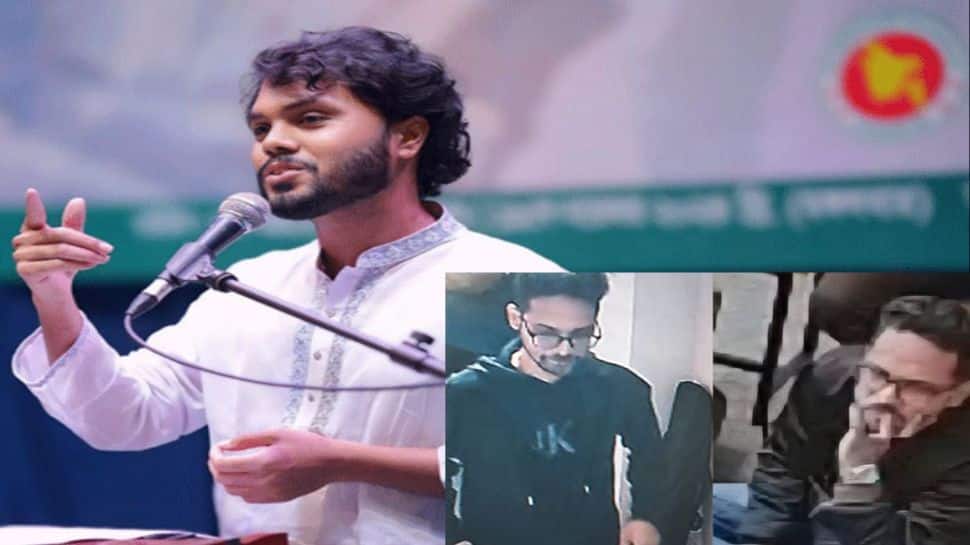
Dhaka: The Bangladesh Police have named Faisal Karim Masud as the key accused in the killing of student leader and Inquilab Manch coordinator Sharif Osman Hadi, a murder that has shaken the country’s fragile political calm.
According to investigators, two men have been identified in connection with the shooting that left the young leader dead. The police say the suspects are Faisal Karim Masud and Mohammad Alamgir Sheikh.
Reports claim that the two accused fled to another country after the attack. Social media posts have gone further, alleging that both crossed into India. The Detective Branch of the Bangladesh Police, however, has not confirmed these claims.
Police officials said 13 people have so far been arrested in the case. Those detained include members of Masud’s family as well as others accused of assisting the suspects before and after the shooting.
Despite the arrests, authorities admit they still do not have confirmed information on the whereabouts of Masud and Sheikh. The police say their passports have been blocked, making it difficult for them to leave the country legally.
What Police Know About Masud
Detective Branch chief Shafiqul Islam told BBC that investigators are aware of online claims suggesting Masud fled to India after the murder. He said these claims are unverified.
The Rapid Action Battalion and the Bangladesh Police have jointly arrested 13 people so far. Among them are Masud’s parents, his wife, his brother-in-law and a woman described by investigators as his girlfriend.
According to the police, Masud had been in frequent contact with his wife, her brother and his girlfriend over the phone before the attack. Investigators say evidence gathered so far indicate that Masud fired the shots that struck Hadi.
The police confirmed that three of the arrested relatives were placed on remand for a total of nine days across two phases for questioning. Eight other individuals have been taken into custody for allegedly providing logistical help at different stages, before and after the attack.
Two members of a human trafficking network have also been arrested while probing possible escape routes used by the suspects.
The Dhaka Metropolitan Police earlier said the Rapid Action Battalion had arrested Abdul Hannan, identified as the registered owner of the motorcycle used in the attack. The RAB tracked him through the bike’s registration number and handed him over to the Paltan police station.
Hannan allegedly told police that he had sold the motorcycle earlier and claimed he had no knowledge of how it was later used. Investigators say the attackers wore helmets and fired at Hadi from very close range.
Simultaneously, Bangladesh’s National Board of Revenue has ordered commercial banks to freeze all accounts linked to Masud and his IT company, Apple Soft IT Limited.
The police have also said that the suspects were linked to politics associated with the banned student organisation Chhatra League, the student wing of Sheikh Hasina’s Awami League. The group was outlawed in October 2024.
Beyond these details, much of what is circulating about Masud is speculative, with investigators cautioning that confirmed information is still limited.
Who Was Sharif Osman Hadi?
Sharif Osman Hadi rose to prominence during the student protests against former Prime Minister Sheikh Hasina in August last year. He was one of the most visible faces of the movement and a leading force within the anti-Hasina Inquilab Manch.
Hadi was also preparing to contest the upcoming elections. At the time of the attack, he was campaigning as an independent candidate from the Dhaka-8 constituency.
The Inquilab Manch gained national attention during the July 2024 student movement. Critics have described the group as hardline, accusing it of working to weaken the Awami League. Despite its role in the protests, the Mohammad Yunus-led interim government later dissolved the platform and barred it from contesting national elections.
Hadi was shot in Dhaka on December 12 and suffered critical injuries. He was flown to Singapore for advanced treatment but died on December 18. His death triggered widespread protests that soon turned violent.
Following the killing, large-scale unrest erupted across Dhaka. Offices of two leading newspapers, Prothom Alo and The Daily Star, were vandalised and set on fire last week. Streets filled with protesters, and anti-India slogans became a recurring feature of the demonstrations.
India-Bangladesh Tensions Deepen
The violence has unfolded against the backdrop of worsening ties between Dhaka and New Delhi. After Hadi’s death, protests in Bangladesh increasingly took an anti-India tone.
Earlier, the National Citizen Party southern chief organiser Hasnat Abdullah had said Bangladesh should have expelled India’s high commissioner. He warned that any attempt to destabilise Bangladesh would lead to India’s northeastern Seven Sisters being isolated.
India responded by summoning the Bangladesh’s high commissioner in New Delhi, expressing serious concern over the security of the Indian High Commission in Dhaka.
Relations between the two neighbours have been tense since Hasina was ousted from power in August 2024. Her ouster has triggered intense debate inside Bangladesh over India’s alleged role in the country’s politics.
Hasina is presently living in New Delhi. Her son, Sajeeb Wazed Joy, has accused the interim government of trying to establish an Islamist system of governance.
As the police continue their search for Masud, Hadi’s murder is at the centre of a political storm, one that has exposed deep fractures within Bangladesh’s society, its institutions and its regional relationships.
About the Author