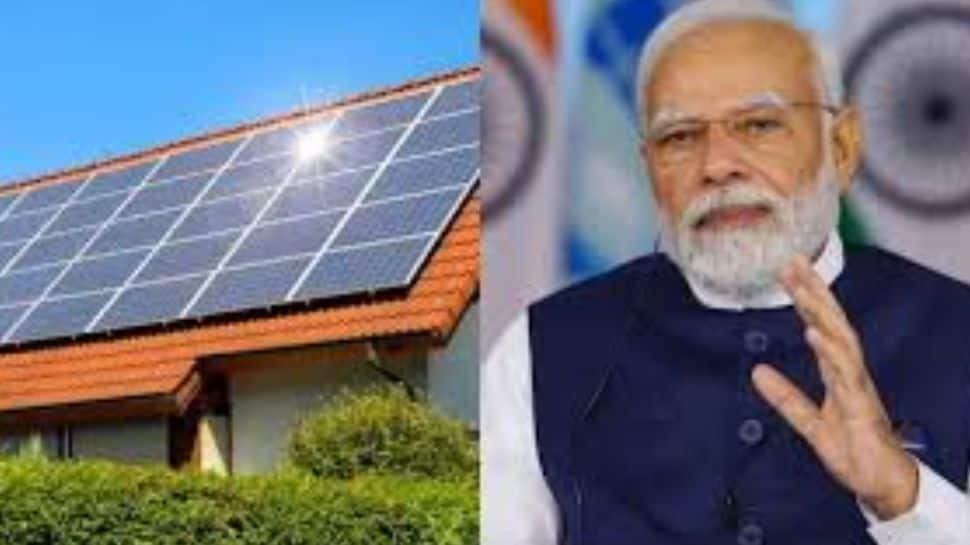
New Delhi: The PM Surya Ghar: Muft Bijli Yojana, the Centre’s flagship rooftop solar programme, has already helped 7.7 lakh households across India bring their electricity bills down to zero. The scheme is rapidly emerging as a game-changer for middle-class families struggling with rising power costs, while also pushing India’s clean-energy transition.
Launched in February 2024, the initiative aims to install rooftop solar systems in one crore households by FY 2026–27. With a total outlay of over Rs 75,000 crore, the government is offering substantial financial support to make solar adoption affordable for ordinary households.
Under the scheme, families installing rooftop solar panels receive direct subsidies of up to 40 percent, depending on system capacity. Once installed, households can generate their own electricity, sharply reduce grid dependence, and even earn credits through net metering when excess power is fed back into the grid.
How the Scheme Is Helping Households
So far, nearly 20 lakh rooftop solar systems have been installed nationwide. Millions of families are now seeing dramatic savings on monthly electricity expenses, with many reporting nil power bills, especially during high-sunlight months.
Beyond savings, the scheme also supports energy security, reduces carbon emissions, and creates local employment in solar manufacturing and installation.
Who Is Eligible?
To apply, you must:
Be an Indian citizen
Own a house with a suitable rooftop
Have an active electricity connection
Not have availed any other solar subsidy for the same system
Step-by-Step: How to Apply Online
Visit the official PM Surya Ghar portal
Register using your mobile number and basic details
Select your state and DISCOM, and enter your consumer number
Apply for rooftop solar and wait for technical feasibility approval
Choose an empanelled vendor for installation
Apply for net metering after installation
Submit bank details to receive the subsidy directly in your account
With power tariffs rising steadily, the PM Surya Ghar scheme—backed by the Government of India—is fast becoming one of the most impactful household-level reforms, turning rooftops into long-term sources of savings and clean energy.
About the Author