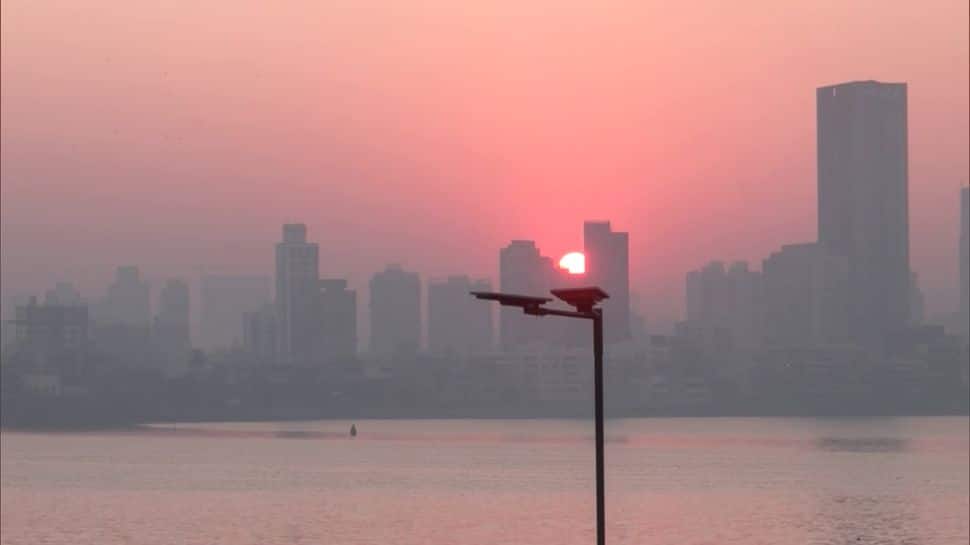
Mumbai Weather Update: Mumbai woke up on Tuesday with a thick layer of smog spread across the city, reducing visibility and raising fresh concerns over worsening air pollution. Despite favourable weather conditions, air quality emerged as the city’s biggest challenge.
According to data from air quality monitoring platform AQI.in, Mumbai’s overall Air Quality Index (AQI) stood at 163 during the early hours of Tuesday, placing it in the ‘poor’ category. While this marked a slight improvement compared to the severe levels seen late last month, experts warned that the air remains unhealthy for daily exposure.
Early morning commuters, walkers and schoolchildren reported hazy surroundings and an acrid smell, especially in low-lying and traffic-heavy areas. The India Meteorological Department (IMD) forecast a bright day with temperatures ranging between 18°C and 34°C, but pollution overshadowed the comfortable weather.
Several parts of the city recorded alarming AQI levels. The Wadala Truck Terminal reported an AQI of 335, categorised as ‘severe’, posing serious health risks even to healthy individuals. Chembur and Powai followed with AQI levels of 263 and 210 respectively, both falling in the ‘unhealthy’ range. Deonar recorded an AQI of 203, while the Bandra Kurla Complex (BKC) registered a poor reading of 190.
(Also Read: International Travel Alert: UK, Canada, And Singapore Warn Citizens Against Delhi’s ‘Toxic Air’)
Suburbs Slightly Better
Some suburban areas showed relatively lower pollution levels. Charkop recorded an AQI of 85, while Parel-Bhoiwada stood at 82, both in the ‘moderate’ category. However, areas such as Mulund West (110), Borivali West (123) and Kandivali East (127) slipped back into the ‘poor’ range, highlighting the widespread nature of the problem.
Health Concerns Grow
With winter setting in, pollution levels are expected to remain a concern. Construction dust, large infrastructure projects and heavy traffic emissions continue to be major contributors. Experts warn that prolonged exposure to polluted air can be harmful, particularly for children, senior citizens and those with respiratory or heart conditions.
About the Author