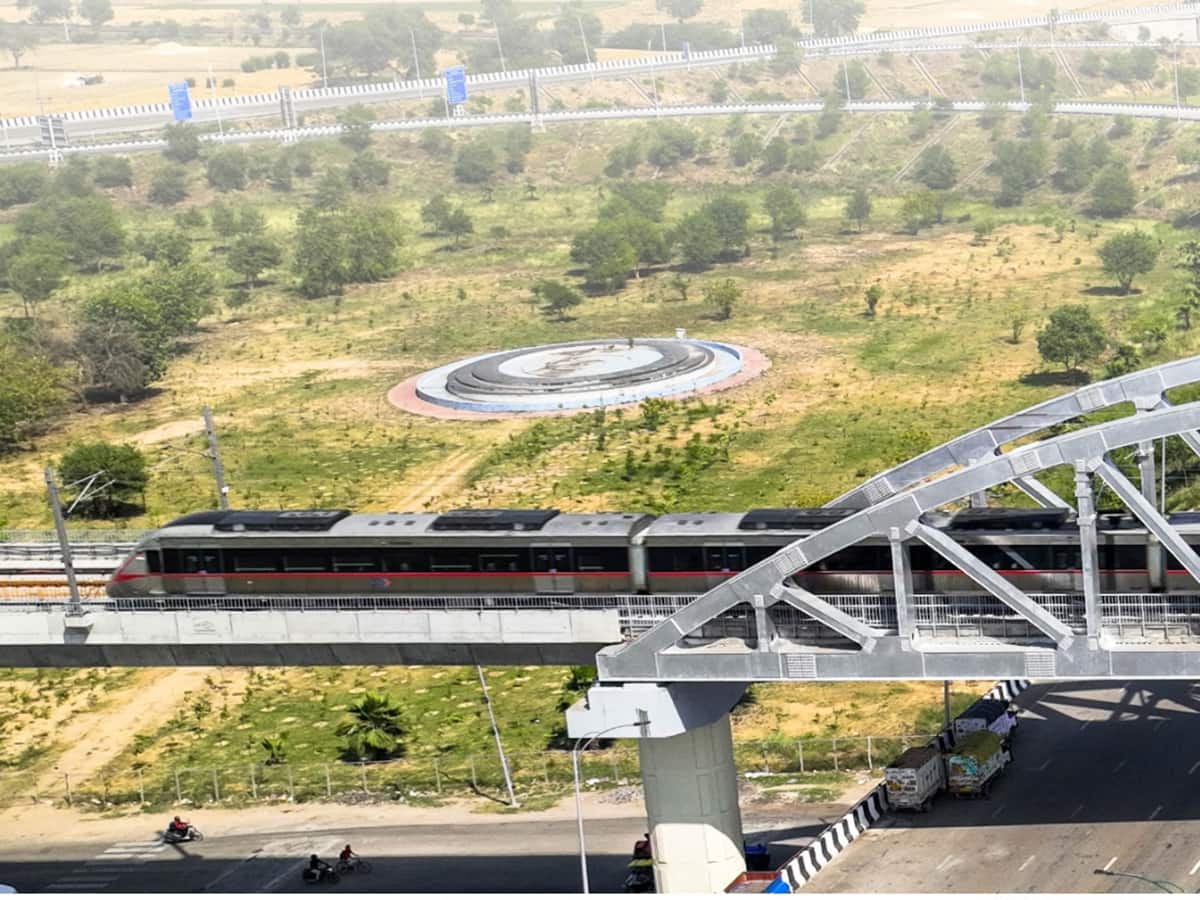
The proposed Rs 15,000-crore Namo Bharat Regional Rapid Transit System (RRTS) corridor connecting Gurugram, Faridabad and Noida, now backed by NCRTC’s finalised Detailed Project Report (DPR), is emerging as one of the most impactful infrastructure developments for Delhi-NCR’s real estate landscape. Designed to offer high-speed, high-frequency, largely elevated connectivity across three major economic centres, the corridor is expected to reduce end-to-end travel times to under an hour. This cross-city mobility will definitely shape residential preference, pricing dynamics and long-term value for homebuyers and investors alike.
“By significantly reducing travel time and improving regional accessibility, Namo Bharat is changing how people commute across Delhi-NCR. At the same time, it is supporting planned real estate development around transit corridors, contributing to more organized, connected, and economically active urban regions,” said Puneet Vats, CPRO, NCRTC.
According to an ANAROCK report, the National Capital Region’s story has two distinct threads – established corporate corridors and new-age investor magnets. Areas like Sohna Road in Gurugram and Fridabad have witnessed a jump in not only new projects but also in rental incomes and land prices, said reports.
“Prices are up 74% since 2021, while rents have climbed 50% in Sohna. Sector-150 in Noida is the standout nationally. Its property values have soared 139% in just over three and a half years – the fastest among all micro markets in this study – fuelled by new township projects, greenfield planning, and investor enthusiasm. Rents here have also surged 71%, reflecting demand from both working professionals and end-users drawn by its planned open spaces and sports facilities,” said the report earlier this year.
The real estate in the Delhi-NCR is currently undergoing one of its strongest phases in over a decade, feel experts. 2025 has witnessed robust residential sales across metros and sustained demand from end-users. Commercial leasing too has shown healthy momentum from IT, GCCs and the flex-office segment, while institutional capital continues to flow into alternative asset classes such as data centres and warehousing. In this backdrop, a rapid rail spine linking the region’s most active residential and office hubs is expected to strengthen NCR’s position as India’s most dynamic and future-ready property market.
For Gurugram, the RRTS will integrate into an already well-established network comprising NH-8, Dwarka Expressway, the Metro system and Southern Peripheral Road. Faster cross-city travel can expand the pool of professionals willing to work in Gurugram’s corporate clusters while living in Faridabad or Noida, thereby lifting residential demand across a wider belt. Experience from the operational Namo Bharat corridor indicates that stations often catalyze neighbourhood-level development, driving absorption in mid-income and premium housing, neighbourhood retail, and flexible workspaces.
Noida and Greater Noida, which already benefit from widespread Metro coverage and expressway linkages, will gain from a more direct, high-speed connection to Gurugram and Faridabad. This is likely to encourage young professionals to consider cross-city living arrangements based on lifestyle and pricing advantages rather than commute constraints alone. Mid-income, upper mid-income and rental housing markets stand to benefit meaningfully as mobility becomes both predictable and time-efficient.
Historically more affordable than Gurugram or central Noida, Faridabad’s challenge has been its perception of limited connectivity. A dedicated rapid rail corridor dramatically changes this equation. Faster access to major job centres can reposition the city from a peripheral alternative to a core residential choice-especially for families seeking larger homes, greener surroundings and well-planned communities without losing proximity to employment hubs.
Across NCR, average residential prices in 2025 hover roughly in the mid-to-upper band: Gurugram around Rs 11,000-12,000 per sq ft, Noida about Rs 9,000-9,500 per sq ft, and Faridabad still relatively affordable near Rs 4,000-5,000 per sq ft, leaving greater headroom for appreciation in Faridabad.
Industry leaders echo this sentiment.
Mohit Malhotra, Founder & CEO of NeoLiv, said that the Namo Bharat corridor has the potential to change how homebuyers view NCR by making cross-city travel faster and predictable. He said that the corridor positions the golden trinity of Faridabad, Gurgaon and Noida interconnected with commuting becoming seamless.
The upcoming Namo Bharat RRTS corridor is a significant milestone in strengthening integrated mobility across the NCR. By enabling faster, multi-modal connectivity between Gurugram, Faridabad, Noida and Greater Noida, it lays the foundation for more inclusive and accessible urban growth.
Manik Malik, CEO, BPTP, notes, “Such large-scale infrastructure investments serve as strong enablers for residential and economic development, linking population centres with key employment and commercial hubs. Faridabad, in particular, is poised to benefit from this improved regional integration, unlocking greater convenience and livability for both residents and businesses.”
Regional transit systems of this scale redefine how people live and invest by reducing travel time and unlocking well-planned growth zones. As connectivity strengthens across key NCR hubs, demand will naturally shift toward emerging, transit-linked corridors.
“The Namo Bharat RRTS corridor link that spans Gurugram, Faridabad, and Noida will, for the first time, fill the highly sought-after connectivity gap. Key micro-markets such as Main Mathura Road and emerging township developments across Faridabad are expected to witness heightened traction,” said Uddhav Poddar, CMD, Bhumika Group.
Experts hoped that the project will usher in tremendous growth in property value and demand as the travel times to the major employment hubs in NCR will be reduced to a few minutes. For investors as well as buyers, Faridabad is emerging as the most promising city for high-quality lifestyle and this RRTS corridor will further boost the prospects.
“Faridabad is standing at the cusp of a defining transformation, fueled by a coordinated push in regional mobility. With high-speed rail, the FNG Expressway, and the upcoming link to Jewar Airport, the city is evolving from a traditional industrial belt into a premium, transit-oriented powerhouse,” said Paras Rai, Co-Founder & Managing Director, Property Master.
As the RRTS corridor moves toward implementation, market participants expect a more balanced and structurally driven cycle-where connectivity, planning quality and governance become the primary anchors of long-term real estate value across NCR. Faridabad, with its evolving ecosystem and renewed infrastructure push, is poised to stand out as the biggest beneficiary of this next chapter.
About the Author