North India is currently experiencing a severe cold wave, with temperatures dropping to sub-zero levels in many regions and dense fog causing widespread disruption. The worst-affected areas include Ladakh and Kashmir, where temperatures have fallen sharply. Leh recorded a minimum temperature of –9.6°C, while Kargil dipped to –8.4°C. In the Kashmir Valley, which is presently in the harshest 40-day winter phase known as Chillai Kalan, Srinagar recorded –3.6°C, while Gulmarg saw the season’s lowest temperature at –8.8°C. In South Kashmir, Shopian recorded a minimum of –5.6°C, while Pulwama registered –4.2°C.
In the northern plains, regions such as Rajasthan, Punjab, and Haryana are witnessing temperatures ranging between 1°C and 6°C. For example, Fatehpur in Rajasthan recorded a low of 1.6°C. In the Delhi-NCR region, minimum temperatures are hovering between 7°C and 9°C, with maximum temperatures struggling to reach 17°C to 18°C.
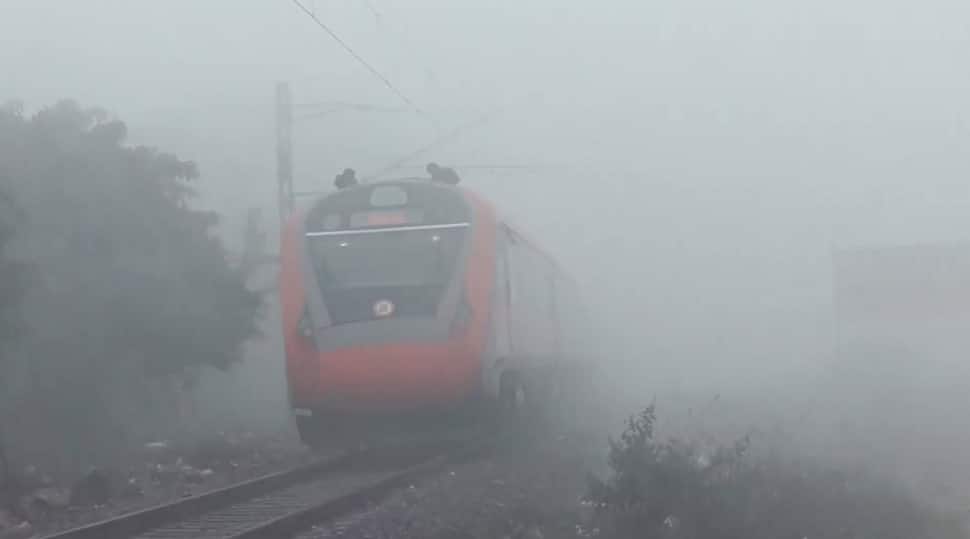
Dense fog and low visibility have severely affected daily life. Dense to very dense fog has reduced visibility to below 50 metres in several areas, including Delhi, Punjab, Haryana, and Uttar Pradesh. This has caused major travel disruptions, with numerous flights delayed or cancelled at Indira Gandhi International Airport (IGI) and long-distance trains running several hours behind schedule.
A “triple strike” of weather conditions is being observed in north India, particularly impacting Kashmir. The region is facing snowfall in the Himalayan areas, winter rain across the plains of Punjab, Haryana, and Rajasthan, along with persistent cold wave conditions.
The India Meteorological Department (IMD) has issued Orange Alerts for dense fog and cold day conditions in Jammu and Kashmir, Uttarakhand, Punjab, Haryana, and Delhi. The IMD has warned that intensified cold wave conditions are likely to persist through January across northwest and central India, particularly in Jammu and Kashmir. According to the IMD, the ongoing harsh winter is partly due to the La Niña phenomenon, which typically brings colder-than-normal conditions to northern India.
The IMD has also forecast moderate to heavy snowfall in the higher reaches of Jammu and Kashmir, Himachal Pradesh, and Uttarakhand through January 5–6. Travellers are advised to check flight, train, and road conditions before planning their journeys.
Meanwhile, the Kashmir Valley continues to experience Chillai Kalan, the coldest and most severe phase of winter. This 40-day period began on December 21.
About the Author