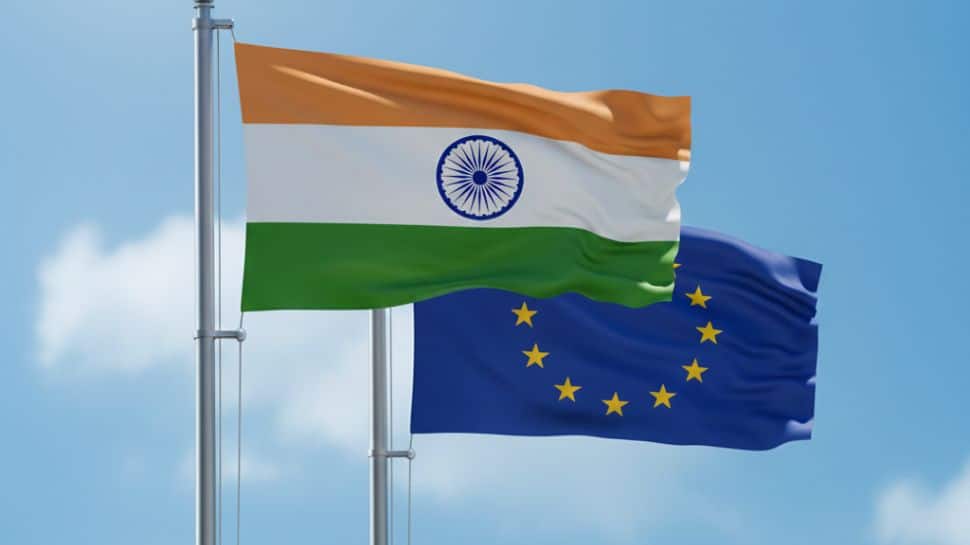
European Union leaders are expected to be chief guests for the upcoming Republic Day celebration on 26th January 2026, Expected guests include President of the European Commission Ursula von der Leyen and President of the European Council Antonio Costa.
The European Union has officially accepted India’s invitation for the Republic Day 2026, according to CNN News18. The visit of European leaders is expected to coincide with the India-EU Summit amid the ongoing Free Trade Agreement negotiations. The India-EU summit is expectedly stalled for 27th January with no official announcement as of now.
The India-EU Free Trade Agreement talks restarted after years of delays, show ramped-up focus on market access, services, and investment, with officials optimistic about a breakthrough soon.
The European Union (EU) Trade and Economic Security chief Maroš Šefčovič, who visited India in December 2025, laid out the groundwork for the India-EU FTA.
The arrival of EU officials in India for the Republic Day sets a deadline for India and the EU to finalize their Free Trade Agreement (FTA) talks.
Who are Ursula von der Leyen and António Costa?
Ursula von der Leyen serves as President of the European Commission, championing the EU’s Green Deal and Competitiveness Compass to boost economic resilience against the US and China.
António Costa, who serves as the President of the European Council since 2024, coordinates EU summits and diplomacy, previously as Portugal’s Prime Minister. The visit of the two leaders signals India’s view of the EU as a unified strategic partner amid global shifts.
The India-EU Strategic Partnership amid FTA Talks
Under the Presidency of Ursula von der Leyen and with a focus on the ‘Competitiveness Compass’, the EU aims to build one strong market to match the US and China. It also faces farmer protests over the ‘Green Deal’ green shift. The India-EU Free Trade Agreement will be opening new markets, cutting China’s reliance, and shared green technology.
The India-EU FTA will be significant in easing Carbon Border Adjustment Mechanism (CBAM) carbon taxes on Indian exports like steel, enabling green technology transfers, including hydrogen and Electric Vehicles, diversifying EU supply chains from China, boost joint clean energy investments for mutual competitiveness, and increased focus towards sustainable growth.
Also Read: Silent Warriors On Kartavya Path: Indian Army’s Animal Contingent To Take Part In Republic Day Parade 2026
About the Author