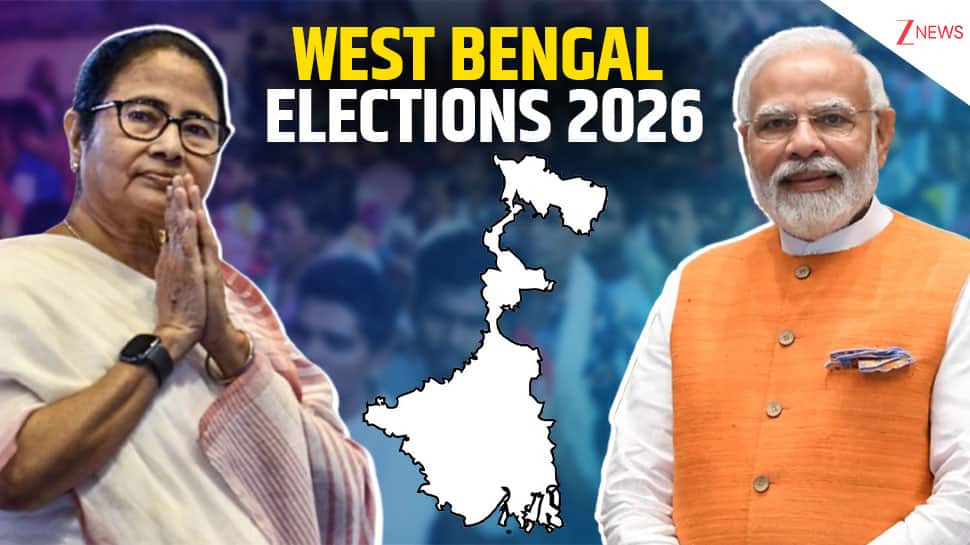
With the West Bengal assembly elections just over a year away, Chief Minister Mamata Banerjee is steering her government’s welfare machinery into overdrive. A series of state-led initiatives, often referred to as the “Hooghly Googly,” aims to provide direct relief to rural families, returning migrants, women, and students. These schemes are seen by many as a deliberate attempt to offer a counter-narrative to the Modi government’s centralised welfare programmes, highlighting the state’s capacity to deliver grassroots support tailored to local needs.
The timing of these measures is politically significant. With the elections looming, the government is leveraging visible welfare schemes to reinforce its pro-poor image and secure voter loyalty. By focusing on tangible benefits such as housing, food security, employment, and education, the ruling party hopes to consolidate its core support base while appealing to migrants and marginalised communities who may feel overlooked by central policies. The list of schemes that could challenge the saffron government during the upcoming polls are:
Shramshree Scheme: Returning Migrants In Focus
The Shramshree Scheme, introduced in 2025, is perhaps the most politically significant of these initiatives. Targeting Bengali migrants returning from other states, it offers a one-time travel allowance alongside a monthly stipend for up to a year. Beyond financial aid, the scheme links beneficiaries to essential services, including ration cards, health coverage, skill-development programmes, and schooling for children. By addressing the vulnerabilities of migrants, a demographic often neglected in policy debates, the state government positions itself as attentive and responsive, contrasting sharply with the Centre’s broader, less targeted schemes.
Banglar Bari: Rural Housing Security
Housing has long been a sensitive electoral issue in Bengal. The Banglar Bari (Gramin) scheme promises pucca homes to eligible rural families, stepping in where central housing funds have fallen short. With the government allocating resources to cover over 12 lakh households, this initiative does more than meet a basic need; it is a tangible demonstration of the state government’s ability to deliver, and it resonates strongly in rural constituencies that form the backbone of electoral support.
Swasthya Sathi: Health Coverage For All
Swasthya Sathi, the state’s health insurance programme, provides cashless coverage for secondary and tertiary medical treatment for eligible residents. Beneficiaries can access treatment in government and empanelled private hospitals for serious illnesses without out-of-pocket expenditure. For returning migrants and economically disadvantaged families, Swasthya Sathi ensures access to quality healthcare, a critical factor in daily life and political perception. Notably, the West Bengal government has not yet implemented the Centre’s Ayushman Bharat Yojana, making Swasthya Sathi the primary health coverage programme for millions in the state. Its inclusion in welfare packages like Shramshree further strengthens the government’s claim of providing holistic social security.
Khadya Sathi: Sustaining Food Security
Food security remains a cornerstone of Bengal’s welfare narrative. The Khadya Sathi Scheme continues to provide subsidised rice and wheat to millions of families, ensuring that basic sustenance is not left to market forces. In a politically charged environment, the reliability and scale of such programmes provide the ruling party with a consistent narrative of care and protection, reinforcing its credibility among economically vulnerable voters.
Women And Student-Centric Schemes
Programmes like Kanyashree and Anandadhara aim to empower women and support student education through financial incentives, delayed marriage programmes, and vocational training. These schemes serve a dual purpose: improving human development outcomes while cultivating loyalty among young voters and women, demographics that increasingly influence election outcomes.
Employment And Skill Development
With central employment schemes such as MGNREGA not fully covering the state, initiatives like Karmashree and Utkarsha Bangla focus on generating rural employment and providing skill development. By linking these schemes to returning migrant workers under Shramshree, the government attempts to address both immediate livelihood concerns and long-term employability, a strategic move that combines social welfare with political signalling.
Collectively, these initiatives form more than just a welfare agenda; they constitute a carefully crafted electoral strategy. By focusing on the essentials of daily life — housing, food security, employment, education, and support for migrants, the state government is asserting a welfare identity distinct from the central government. The timing, breadth, and visibility of these schemes suggest that Mamata Banerjee’s administration is keenly aware of the electoral stakes and is actively building goodwill at the grassroots level.
Yet, while these programmes are ambitious, their effectiveness will ultimately be measured by execution. The capacity to deliver benefits reliably, without bureaucratic delays or corruption, will determine whether voters view these schemes as genuine support or as politically motivated promises.
In conclusion, the “Hooghly Googly” is both a social and political play. By reinforcing its welfare credentials ahead of the 2026 elections, the Mamata Banerjee government is signalling that it intends to contest not just seats but narratives, positioning itself as the state-level guardian of citizens’ social and economic well-being in contrast to the central government. Whether this strategy translates into electoral advantage remains to be seen, but it is undoubtedly shaping the discourse in Bengal’s political landscape.
About the Author