U.S.-Venezuela Conflict: In a dramatic escalation of US-Venezuela tensions, President Donald Trump confirmed a large-scale strike against Venezuela on Saturday, claiming that Venezuelan President Nicolás Maduro and his wife were captured and removed from the country.
Also Check- US-Venezuela Strike Live Updates: Venezuela Closes Border With Brazil
The operation comes amid sharply heightened tensions between Washington and Caracas. Trump has repeatedly described the Venezuelan government as a “narco-terrorist regime,” citing drug trafficking concerns as a key justification for US action.
Posting on Truth Social, Trump said, “The United States of America has successfully carried out a large scale strike against Venezuela and its leader, President Nicolás Maduro, who has been, along with his wife, captured and flown out of the Country. This operation was done in conjunction with U.S. Law Enforcement.”
Experts suggest that the implications of Trump’s moves extend beyond Venezuela.
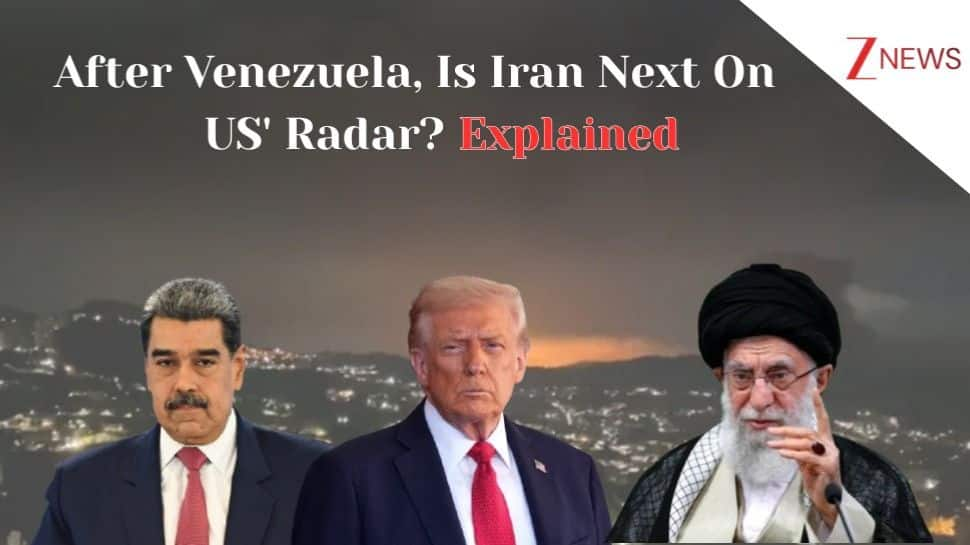
After Venezuela, Is Iran Next For Trump?
Dr. Aparaajita Pandey, Assistant Professor at Amity Institute of Defense and Strategic Studies, emphasized the differing rationales for US intervention in Venezuela and Iran.
“With Venezuela, US policy often refers back to the Monroe Doctrine, which views threats in the Americas as a danger to U.S. soil,” Pandey explained.
“This has always created a grey area regarding sovereignty, because interventions are framed as protective rather than aggressive,” she added.
By contrast, she noted that Iran represents a far more complex geopolitical challenge.
“With Iran, the justification is regional stability and preventing nuclear escalation. Israel and Saudi Arabia, key US allies, cannot be outmatched, and Iran’s alignment with Russia and China further complicates matters. Oil and broader geopolitical dynamics are at the root of both situations, but the stakes in the Middle East are far higher,” Pandey elaborated.
Regarding Trump’s objectives, Pandey added that domestic politics play a role, “In Venezuela, this action is less about weakening the political setup and more about creating a distraction from domestic challenges. For Iran, it’s part of the larger Israel-Iran-Middle East game.”
While speaking of China’s ties with Latin America, she noted that Beijing has made deep inroads in the region, providing credit and technology support to Venezuela.
“Venezuela has a lot of crude oil. The kind of crude oil that they have is very dense. And to take out, to harvest that oil, you need to continuously update your technology, and Venezuela has not been able to do that because its economy has gone for a toss for the past decade. Notably, China has a barter system with them,” she said.
“China has deep pockets. So they don’t really mind putting money into Venezuela, also giving them lines of credit. But if it is assumed that, because of the current situation, China will not get its requisite oil, or they’re going to have a problem, that is wrong. Beijing is not banking on Venezuelan oil. They get oil from somewhere else,” Pandey explained.
“Iran, meanwhile, controls strategic choke points like the Bab-el-Mandeb Strait. Both countries’ foreign partnerships limit U.S. influence, even as Trump projects military strength,” she stated.
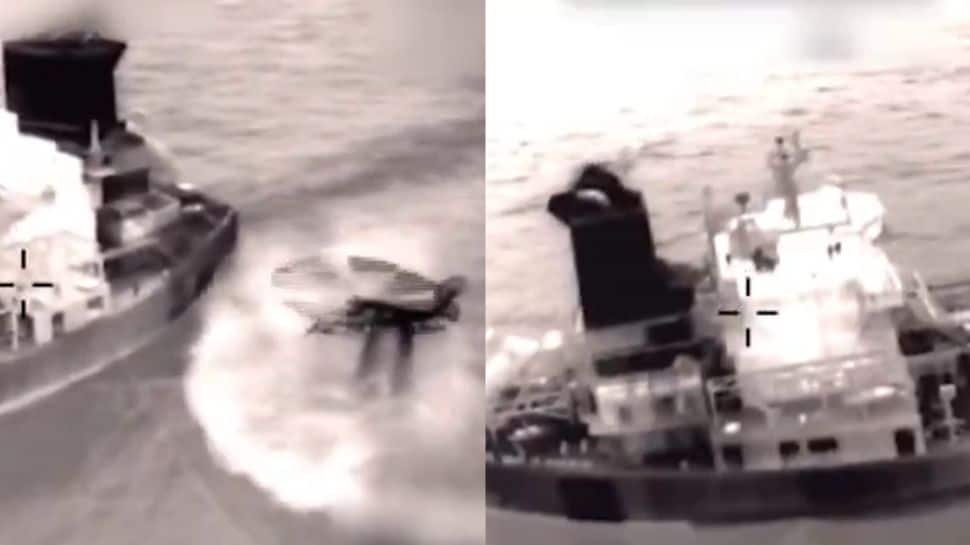
Similarly, Retired Naval Captain and International Affairs analyst Shyam Kumar framed the US approach as “coercive diplomacy.” “The US has been affected by drug trafficking and has progressively used dialogue, diplomacy, and operational measures,” he said. “Naval forces have intercepted ships and consignments, sometimes destroying suspect vessels. Under UN law, these actions are allowed under certain conditions.”
Kumar added, “The effectiveness of Trump’s actions will depend on Venezuela’s response. The country has consistently denied aiding drug networks, so any lasting success requires dismantling the deep-rooted drug nexus and prosecuting those responsible.”
The dual focus on Venezuela and Iran underscores a broader US strategy, involving domestic political aims, counter-narcotics operations, and geopolitical calculations.
About the Author