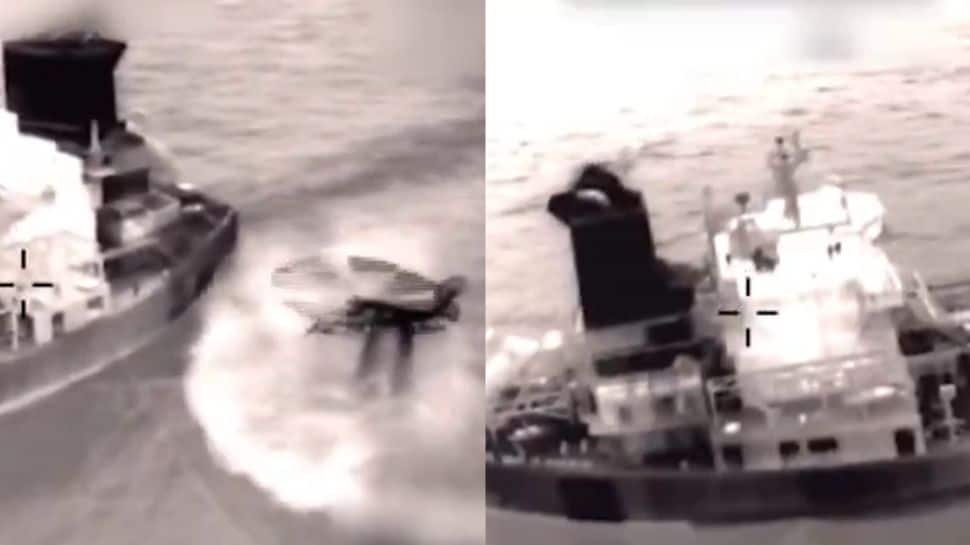
New Delhi: Over the weekend, the United States carried out a large military strike against Venezuela that resulted in the capture of President Nicolás Maduro. The operation caused a dramatic escalation in tensions between Washington and regional governments.
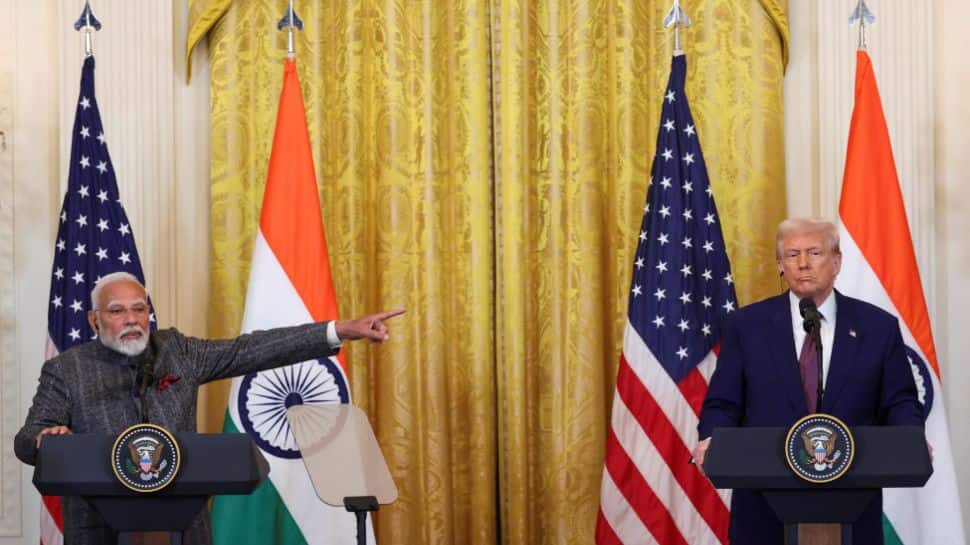
On Monday, President Donald Trump intensified tensions by threatening military action against Colombia, Cuba and Mexico if their governments did not “get their act together”, citing the fight against drug trafficking and protection of American interests in the Western Hemisphere.
The statements highlight the longstanding friction between the United States and its southern neighbours. While many governments in the region have little appetite for American interference, their militaries are ill-equipped to resist US pressure.
Latin America’s Military Power
The United States is the undisputed global military superpower. In 2025, Washington’s defense budget reached $895 billion, roughly 3.1% of its GDP. This is more than the combined military spending of the next 10 largest countries.
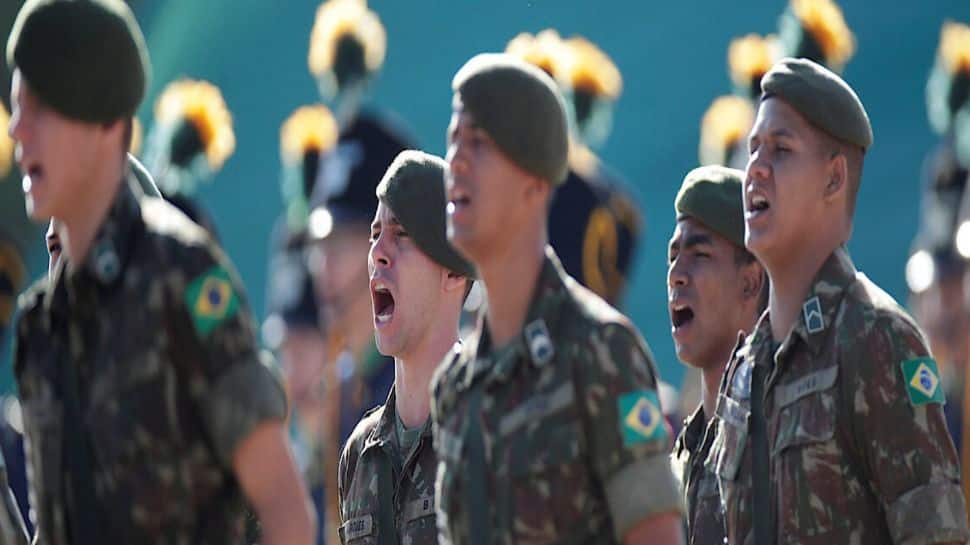
Within Latin America, Brazil tops the charts with the most powerful armed forces, ranking 11th globally in the 2025 Global Firepower rankings. Mexico follows at 32nd, Colombia 46th, Venezuela 50th and Cuba 67th.
Across all conventional metrics (active personnel, combat aircraft, tanks, naval assets and military budgets), these countries are far below the United States. In a direct conflict involving standard weaponry, the United States would maintain overwhelming superiority.
The only notable advantage these nations possess lies in their paramilitary forces, which operate along with conventional armies and can use unconventional tactics against more traditional militaries.
Paramilitary Forces Across Latin America
Latin America has a long history of paramilitary groups that play important roles in internal security. These groups are often armed, organized, politically influential and operate outside the official military chain of command.
Cuba boasts the world’s third-largest paramilitary force, with over 1.14 million members according to Global Firepower. These include state-controlled militias and neighbourhood defense committees, the largest of which, the Territorial Troops Militia, acts as a civilian reserve to assist the army during crises or external threats.
In Venezuela, armed civilian groups known as colectivos enforce political control and intimidate opposition, operating with state tolerance, especially under Maduro’s government.
Colombia’s paramilitary groups first emerged in the 1980s to combat left-wing rebels. Even though many were officially disbanded in the 2000s, some came back as new paramilitary or criminal groups and stayed active in rural areas. Early groups were organised with input from the Colombian military and US counterinsurgency advisers during the Cold War.
In Mexico, drug cartels function as powerful paramilitary forces. Groups like the Zetas, originally founded by former soldiers, wield military-grade weapons and often control territories in defiance of the state. The Mexican military has increasingly been deployed in law enforcement roles in response.
World’s Largest Paramilitaries
Latin American countries have some of the largest paramilitary forces in the world. Cuba’s paramilitary is massive, with over 1.14 million members, including state-controlled militias and neighbourhood defense committees. Venezuela follows with around 220,000 armed civilian members, primarily colectivos that support the government during unrest.
Colombia’s paramilitary groups, though officially demobilised, still have roughly 150,000 members in rural areas, functioning as neo-paramilitary organisations. Mexico’s paramilitary-style forces, largely comprised of drug cartels like the Zetas, also number around 120,000, armed with military-grade weapons.
To put this in perspective, countries like Bangladesh and India have the largest paramilitary forces globally, with 6.8 million and 2.5 million members respectively. Brazil has about 200,000, Iran 220,000 and countries like Russia, China and Pakistan range from 250,000 to 500,000.
Latin American paramilitaries, while smaller than those of Asia, are still important, particularly in their ability to operate alongside or outside conventional military structures.
A History Of US Intervention
The United States has a long record of meddling in Latin America. In the late 19th and early 20th centuries, the so-called Banana Wars saw American troops deployed across Central America to protect corporate interests.
President Franklin D. Roosevelt attempted to change course with the 1934 ‘Good Neighbour Policy’, pledging non-intervention. During the Cold War, the United States funded efforts to overthrow elected governments, often carried out by the CIA, which was set up in 1947.
Washington formally invaded Panama in 1989 under President George HW Bush during ‘Operation Just Cause’, which was aimed at removing President Manuel Noriega, who was later convicted of drug trafficking and other crimes.
About the Author